
Companion planting is a fun and practical gardening technique that pairs plants together for mutual benefits like pest control, improved growth, and maximizing space. This chart serves as a handy reference to help you choose compatible plants that thrive together, making your garden healthier and more productive. Dive in and discover the simple ways you can create a thriving garden ecosystem!
Enhancing Soil Health with Companion Plants
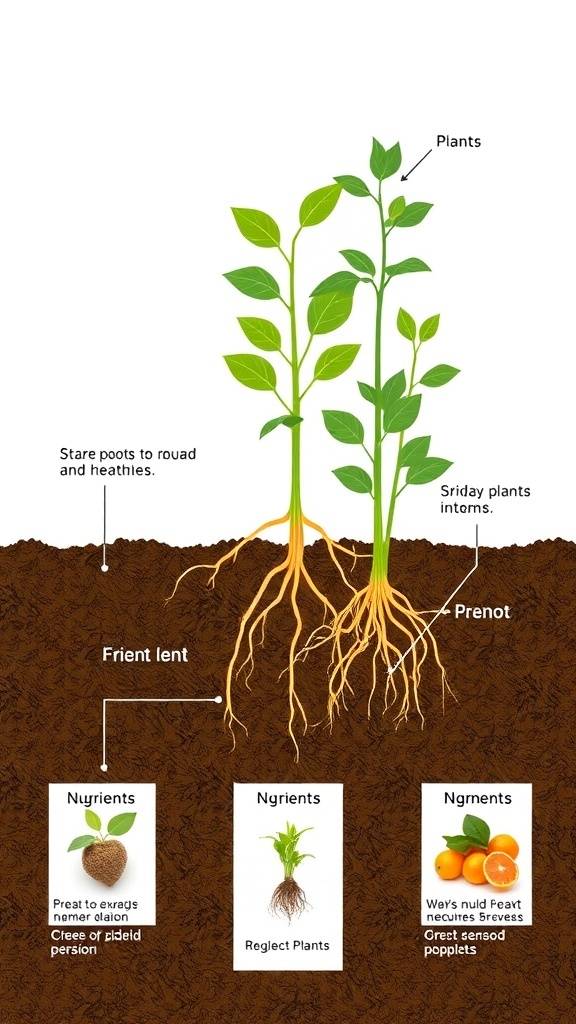
Companion planting is a fantastic way to boost soil health and create a thriving garden. The image illustrates how different plants interact with each other underground. You can see their roots and how they share nutrients.
In the chart, various plants are shown alongside their root systems. This highlights how some plants can help others grow better. For example, certain plants can fix nitrogen in the soil, making it richer for their neighbors.
By planting compatible species together, you can improve soil structure and fertility. This not only benefits the plants but also encourages beneficial microorganisms in the soil. Healthy soil leads to healthier plants, which can resist pests and diseases more effectively.
Using companion plants is a simple yet effective method to enhance your garden’s ecosystem. It’s all about creating a balance that supports growth and sustainability.
Common Companion Plant Pairings
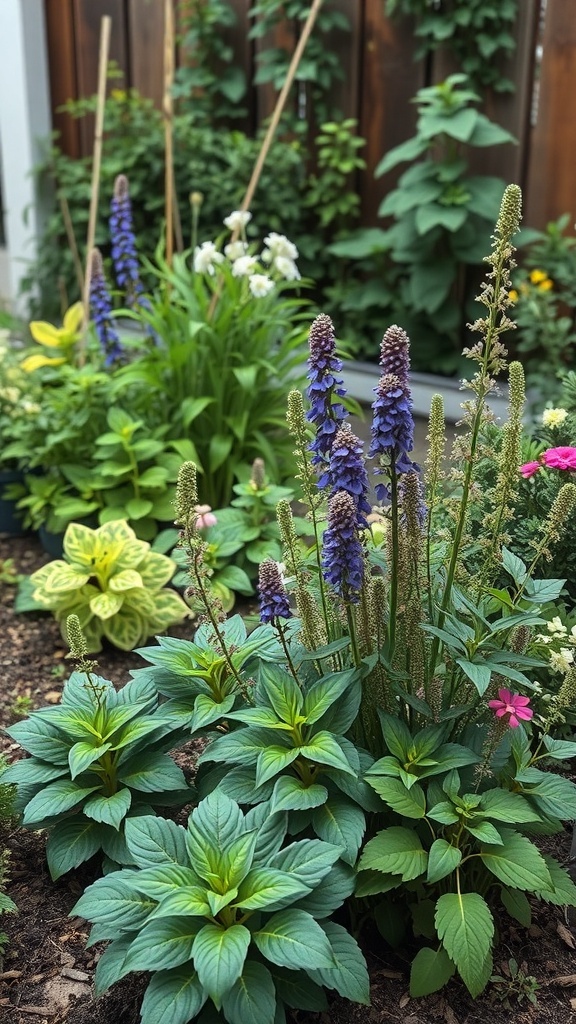
Companion planting is a fantastic way to boost your garden’s health and productivity. The image shows a vibrant mix of plants, showcasing how different species can thrive together. You can see tall flowers standing proudly alongside lush green foliage, creating a lively and inviting space.
In this garden, plants like the blue flowers add height and attract pollinators, while the leafy greens provide a solid base. Pairing these types of plants can help with pest control and improve soil health. For instance, planting marigolds near vegetables can deter harmful insects.
Another great pairing is basil with tomatoes. Basil not only enhances the flavor of tomatoes but also helps repel pests. This kind of synergy in the garden makes it easier to grow healthy plants without relying heavily on chemicals.
So, when planning your garden, think about which plants can work together. Mixing colors, heights, and functions can create a beautiful and productive garden space.
Seasonal Companion Planting Strategies
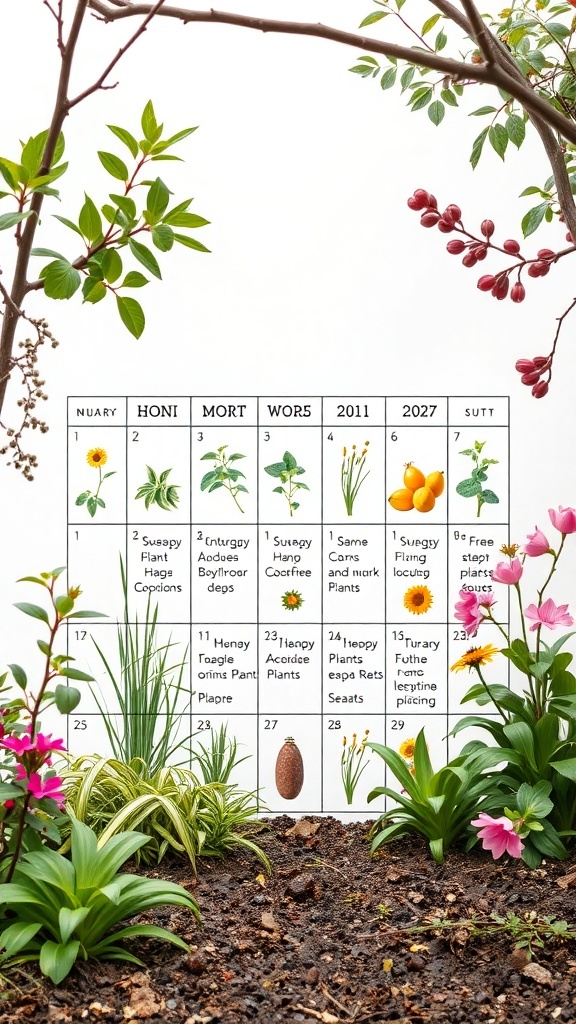
Companion planting is a fun way to boost your garden’s health and productivity. The image shows a companion planting chart, which outlines various plants and their ideal pairings throughout the seasons. This chart is a handy reference for anyone looking to maximize their garden space.
Each month features specific plants and suggestions for what to plant together. For example, some plants thrive when grown alongside others, helping to deter pests or enhance growth. This chart simplifies the process, making it easier to decide what to plant and when.
Using this chart can lead to healthier plants and a more vibrant garden. It encourages a natural ecosystem where plants support each other. So, whether you’re a seasoned gardener or just starting, this chart can be a great tool to help you plan your seasonal planting strategies.
Understanding Companion Planting Benefits
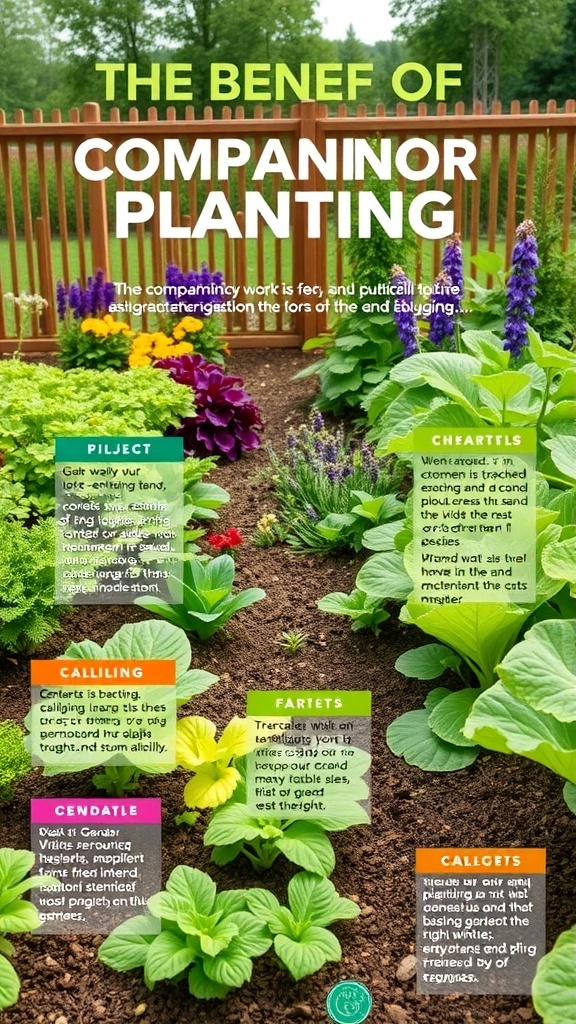
Companion planting is a gardening technique where different plants are grown together for mutual benefits. The image illustrates various plants and their companion relationships, showcasing how they can enhance each other’s growth.
In the chart, you can see different categories like ‘Pijlect,’ ‘Calliling,’ ‘Fariets,’ ‘Cendatile,’ and ‘Caligets.’ Each category highlights specific plants and their roles in the garden. For example, some plants may help deter pests, while others can improve soil health.
Understanding these relationships can lead to a healthier garden. By planting compatible species together, you can maximize space and resources. This method not only boosts plant health but also increases your overall yield.
So, if you’re looking to improve your gardening game, take a look at companion planting. It’s a simple way to create a thriving garden ecosystem!
Companion Plants for Pest Control
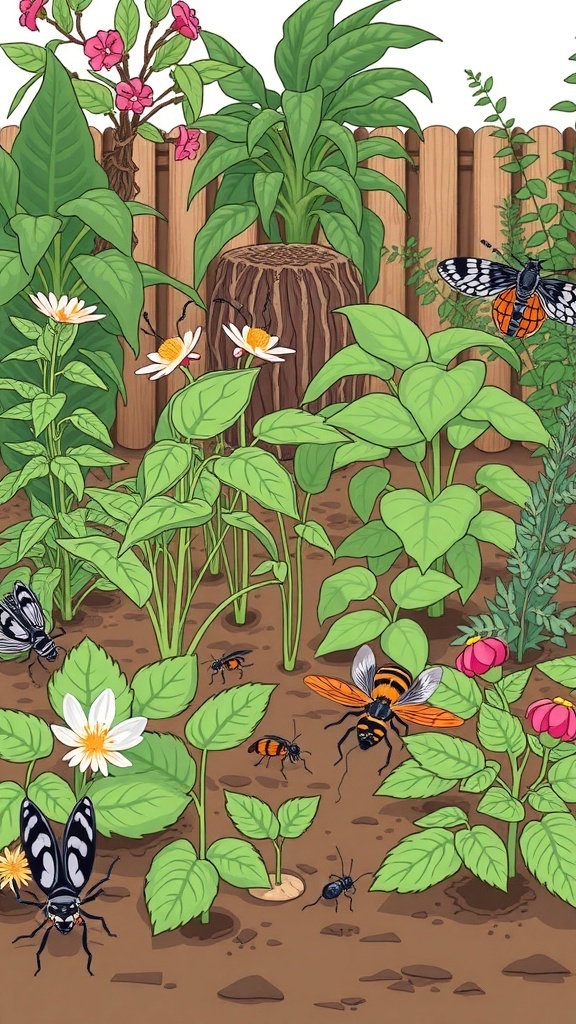
Companion planting is a fantastic way to manage pests naturally. The image shows a vibrant garden filled with various plants and friendly insects. Each plant plays a role in creating a balanced ecosystem.
For instance, certain flowers attract beneficial insects like bees and ladybugs. These helpful critters can keep harmful pests at bay. In the picture, you can spot flowers like daisies, which are known to attract pollinators. This not only helps with pest control but also boosts plant growth.
Another key aspect is the use of specific plants that repel pests. For example, marigolds are often planted alongside vegetables to deter nematodes and other unwanted insects. The combination of plants in the image showcases how diversity can lead to a healthier garden.
It’s all about creating a harmonious environment where plants support each other. By choosing the right companions, gardeners can reduce the need for chemical pesticides and promote a thriving garden ecosystem.
Companion Planting for Improved Yield
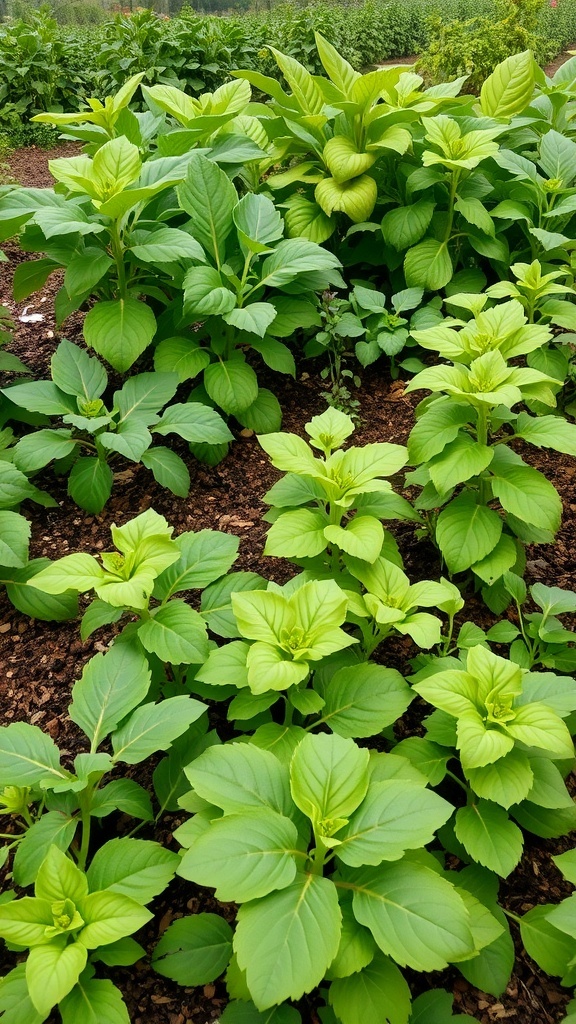
Companion planting is a fantastic way to boost your garden’s productivity. The image shows a lush patch of green plants, likely thriving together. These plants can support each other in various ways, helping to create a balanced ecosystem in your garden.
When certain plants grow side by side, they can enhance each other’s growth. For instance, some plants can repel pests, while others can attract beneficial insects. This natural synergy can lead to healthier plants and a more bountiful harvest.
In the image, you can see how the plants are arranged closely, which is a key aspect of companion planting. This close-knit arrangement not only maximizes space but also creates a microclimate that can benefit all the plants involved.
To get started with companion planting, consider pairing plants that have complementary needs. For example, planting tomatoes with basil can enhance the flavor of the tomatoes while keeping pests at bay. Experimenting with different combinations can lead to surprising results and a more vibrant garden.
Companion Planting in Small Spaces
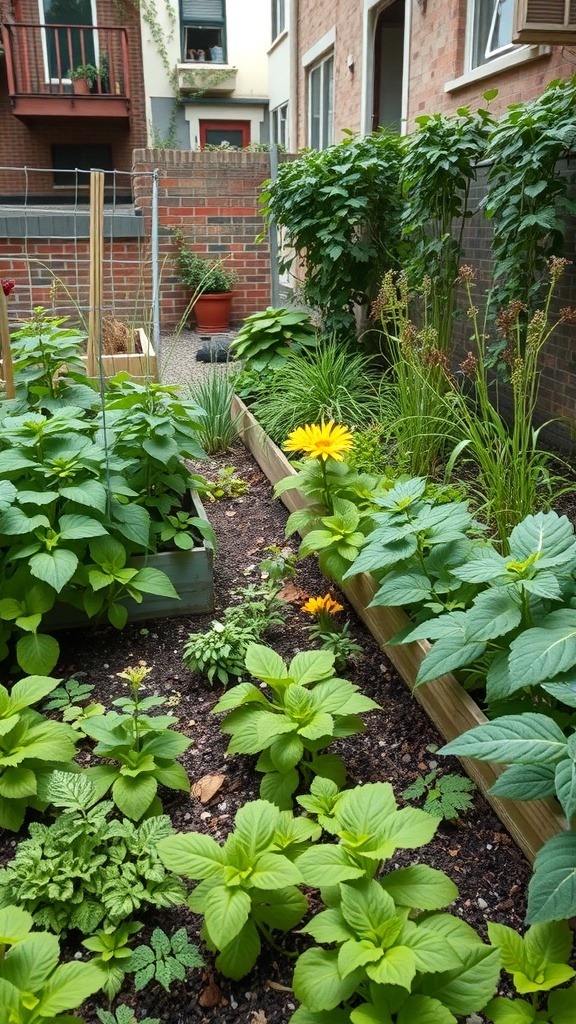
Companion planting is a fantastic way to maximize your garden, especially in small spaces. The image shows a vibrant garden area filled with various plants, showcasing how you can create a lush environment even in limited square footage.
In this garden, you can see a mix of leafy greens, herbs, and flowers. These plants not only look great together, but they also support each other’s growth. For instance, some plants can repel pests while others attract beneficial insects. This synergy helps create a healthier garden.
Notice the raised beds and how they organize the space effectively. Raised beds are perfect for small gardens as they provide better drainage and can be easier to maintain. You can plant herbs like basil and cilantro alongside vegetables like tomatoes or peppers, enhancing flavors and yields.
Don’t forget about flowers! They add beauty and can attract pollinators. Marigolds, for example, are known to deter harmful insects. A splash of color can make your small garden feel more inviting and lively.
Using companion planting techniques not only optimizes space but also promotes a thriving ecosystem. So, whether you have a balcony or a tiny backyard, you can create a productive and beautiful garden.