
Lawn edging is a simple yet effective way to define your garden beds, keeping your landscape looking neat and organized. Whether you use stone, wood, or plastic, edging creates a clear boundary that enhances your yard’s overall appearance while making maintenance a breeze. Let’s explore how to elevate your outdoor space with some stylish lawn edging options!
Installing Metal Edging for Durability
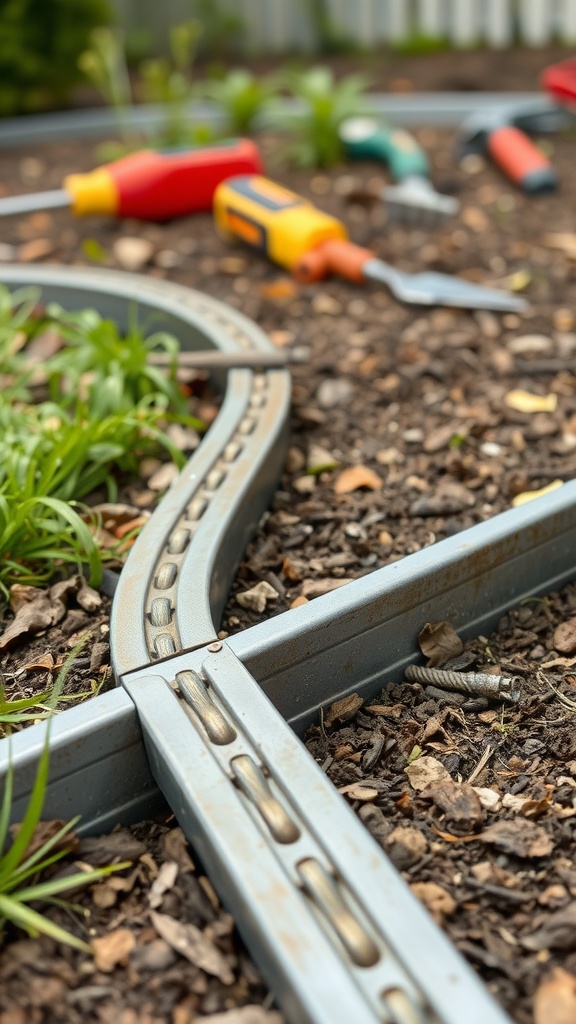
Metal edging is a fantastic choice for anyone looking to create a clean and durable border in their garden. The image shows a close-up of metal edging being installed, with tools scattered around, ready for action. This setup highlights the ease of working with metal materials, which can withstand the elements much better than wood or plastic.
When installing metal edging, start by marking your desired shape on the ground. The flexible nature of metal allows you to create curves and straight lines effortlessly. Once you have your layout, it’s time to dig a trench. This trench will help secure the edging in place, ensuring it stays put over time.
After placing the edging in the trench, use stakes or screws to anchor it down. The tools in the image, like the screwdrivers and trowels, are perfect for this task. Make sure everything is level and aligned before backfilling the soil around the edging. This step is crucial for maintaining a neat appearance.
Finally, take a moment to admire your work! Metal edging not only looks great but also keeps grass and weeds from invading your flower beds. With proper installation, you’ll enjoy a beautiful garden border that lasts for years.
Using Brick for Classic Lawn Borders
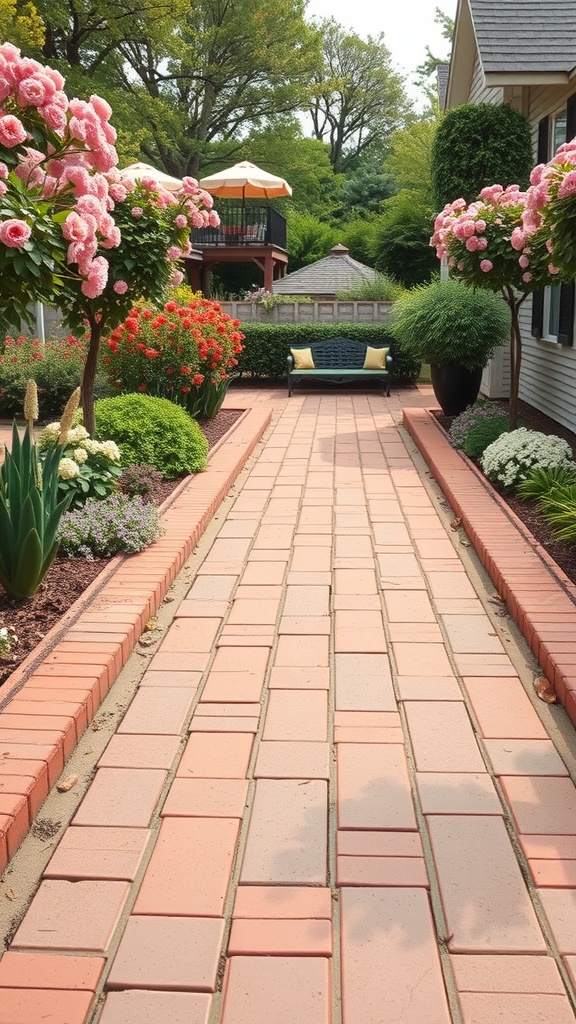
Brick is a timeless choice for lawn edging, bringing a classic charm to any garden. The image shows a beautiful pathway lined with brick, creating a clear boundary between the lawn and flower beds. This not only enhances the visual appeal but also helps keep grass from encroaching into the garden.
The warm tones of the bricks complement the vibrant flowers and lush greenery, making the space inviting. The neat arrangement of the bricks adds structure, guiding the eye along the path. This design encourages visitors to stroll through the garden, enjoying the beauty of the surroundings.
Using brick for lawn borders is practical too. It’s durable and can withstand various weather conditions. Plus, it requires minimal maintenance, allowing you to enjoy your garden without constant upkeep. Overall, brick edging is a smart choice for anyone looking to define their garden space with style.
Maintaining Lawn Edges with Regular Care
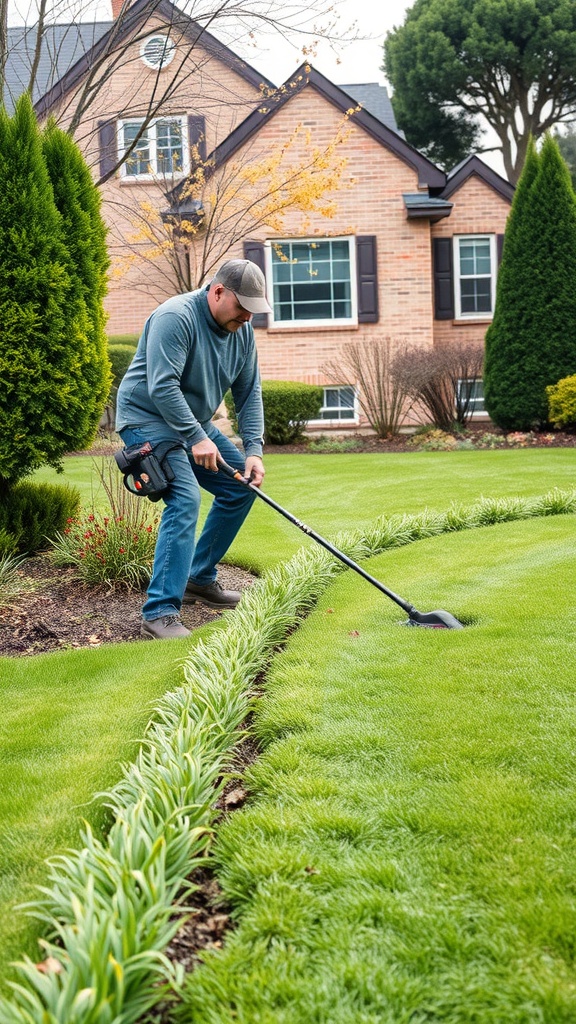
Keeping your lawn edges neat is key to a polished yard. In the image, we see a person using a trimmer to create a clean line between the grass and the flower bed. This simple act makes a big difference in the overall look of the garden.
Regular trimming helps prevent grass from encroaching on flower beds. It also keeps weeds at bay, allowing your plants to thrive. A well-defined edge enhances the beauty of your landscape and makes mowing easier.
Using the right tools, like an edger or trimmer, can make this task quick and efficient. Aim to maintain your lawn edges every few weeks, especially during the growing season. This routine care will keep your yard looking fresh and inviting.
Incorporating Natural Stone Edging
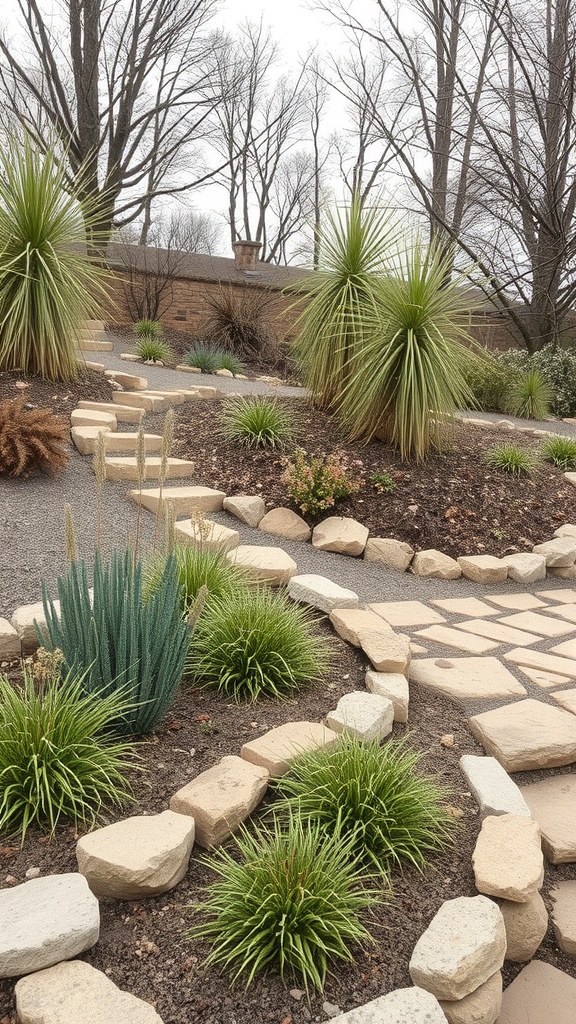
Natural stone edging is a fantastic way to define your garden space. The image shows a beautiful arrangement of stones that create a clear boundary while adding a rustic charm. These stones blend seamlessly with the surrounding plants, enhancing the overall look of the landscape.
Using natural stone not only looks great but also provides durability. Unlike wood, stones won’t rot or decay, making them a long-lasting option for your garden. The varied shapes and sizes of the stones in the image create a unique pattern that draws the eye and adds interest to the garden.
Incorporating plants around the stones softens the edges and creates a more inviting atmosphere. The lush greenery complements the earthy tones of the stones, making the space feel vibrant and alive. This combination is perfect for anyone looking to create a natural feel in their outdoor area.
When planning your stone edging, consider the layout. Curved lines, like those shown in the image, can make the garden feel more organic and less rigid. This approach encourages exploration and adds a playful touch to the design.
Creating Curved Edges with Flexibility
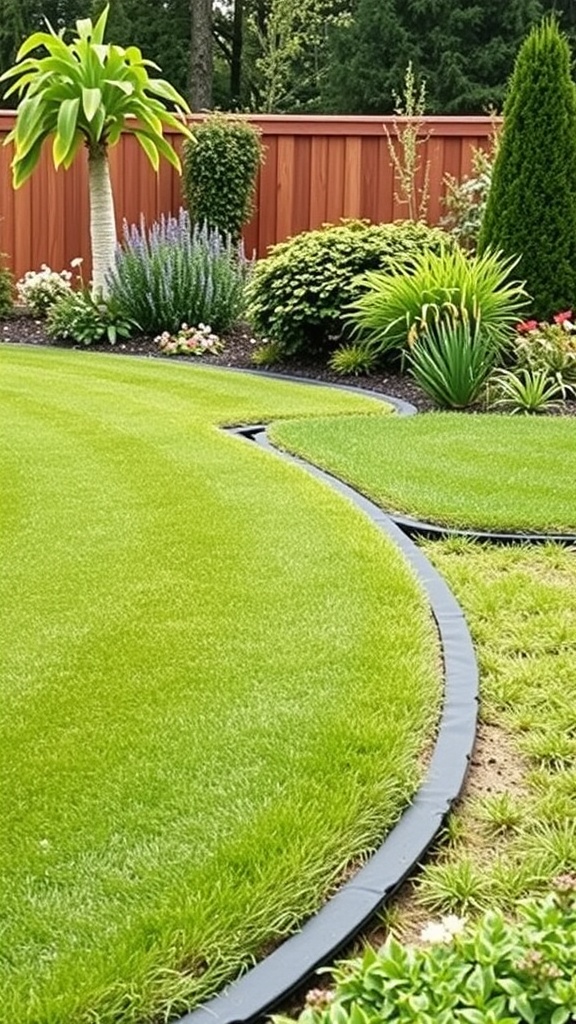
Curved edges can add a unique touch to your lawn. They break the monotony of straight lines and create a more inviting atmosphere. The image shows a beautifully manicured lawn with a smooth, flowing curve that enhances the overall design.
The black edging material is not just functional; it also provides a clean separation between the grass and the flower beds. This contrast highlights the vibrant colors of the plants and flowers, making them stand out even more. Using flexible edging allows you to shape your lawn in ways that suit your style.
When planning your lawn design, think about how curves can lead the eye through the space. They can guide visitors along a path or create cozy corners for seating. The gentle curves in the image invite you to explore the garden, making it feel more dynamic and engaging.
Benefits of Lawn Edging
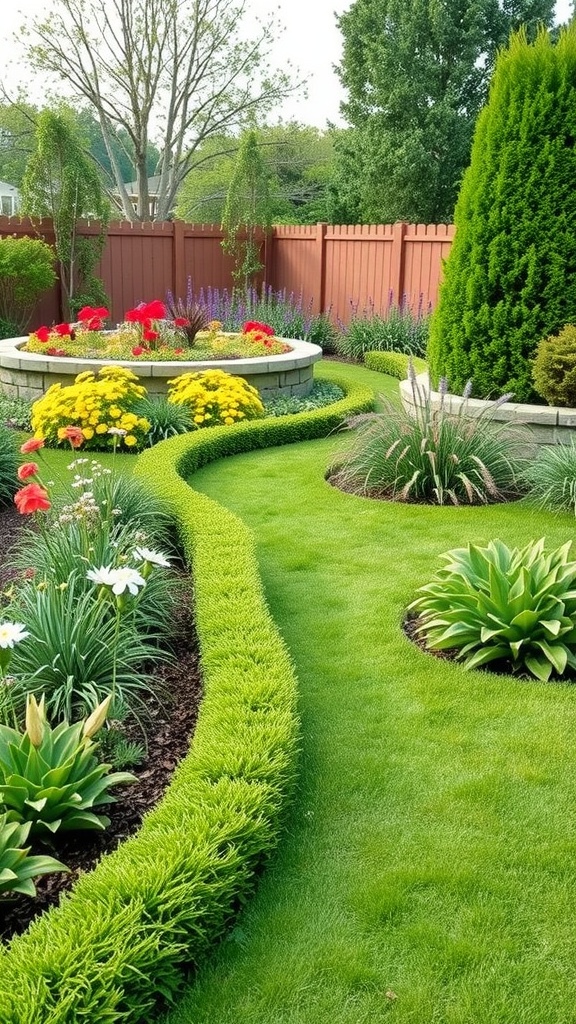
Lawn edging is a simple yet effective way to enhance the look of your garden. The image shows a beautifully manicured lawn with neat edges that separate the grass from the flower beds. This clean line creates a polished appearance, making the garden feel more organized.
One of the main benefits of lawn edging is that it helps to keep grass from invading flower beds. This means less maintenance for you, as you won’t have to constantly trim back wayward grass. It also allows your plants to thrive without competition for space.
Another advantage is the visual appeal. Edging adds definition to your garden, making it look more inviting. The curves and lines in the image highlight how edging can create a flow that draws the eye around the garden. This can be particularly effective in smaller spaces, where every detail counts.
Moreover, lawn edging can help with drainage. By creating a barrier, it can direct water where it’s needed most, preventing pooling in unwanted areas. This keeps your plants healthy and your lawn looking lush.
Incorporating edging materials like stone, wood, or metal can also add texture and interest to your garden. Each material offers a different aesthetic, allowing you to customize your space according to your style.
Plastic Edging for Easy Installation
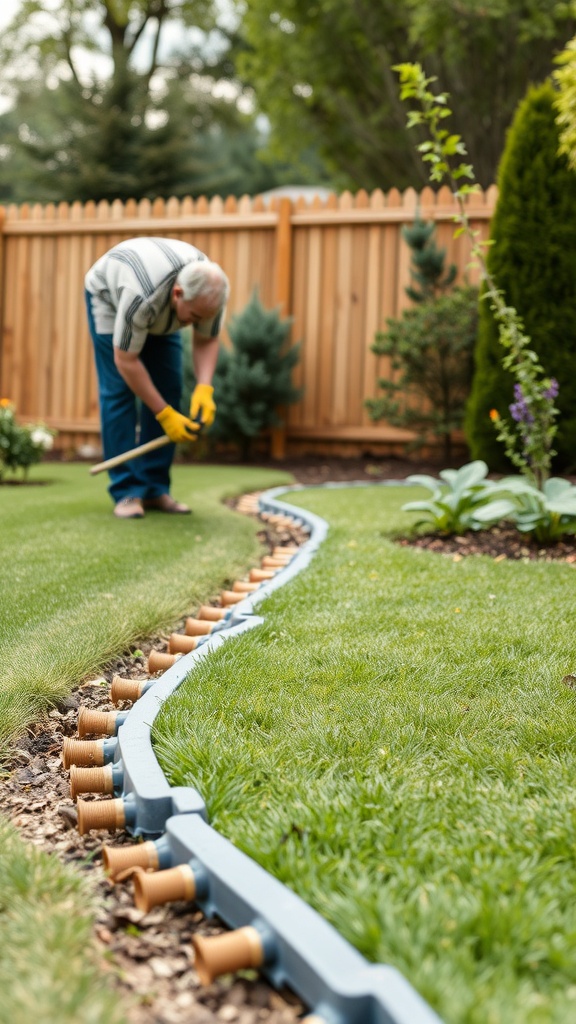
Plastic edging is a fantastic choice for anyone looking to spruce up their garden with minimal effort. In the image, we see a person installing a flexible plastic edging along a lawn. This type of edging is lightweight and easy to handle, making it perfect for DIY projects.
One of the best things about plastic edging is how simple it is to install. You can easily shape it to fit curves and corners, allowing for a clean separation between your lawn and flower beds. The person in the image is using a tool to secure the edging, showing that it’s a straightforward process that doesn’t require professional help.
Another advantage is its durability. Unlike wood or metal, plastic edging won’t rot or rust, ensuring that it will last for years. Plus, it comes in various colors and styles, so you can choose one that matches your garden’s aesthetic. This makes it a versatile option for any outdoor space.
Overall, if you want an easy and effective way to define your garden beds, plastic edging is a great solution. It not only enhances the look of your yard but also helps keep grass and weeds at bay.
Types of Lawn Edging Materials
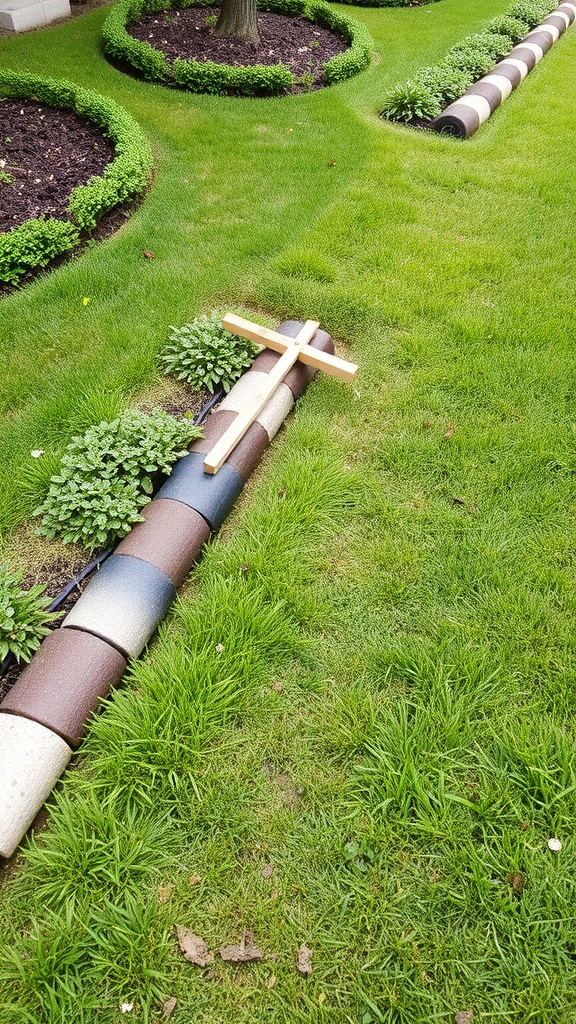
Lawn edging is a great way to define spaces in your garden. It keeps grass from invading flower beds and adds a neat look to your yard. In the image, you can see a well-maintained lawn with a mix of materials used for edging. The different colors and textures create a nice contrast against the lush green grass.
One popular option for lawn edging is stone. It’s durable and can create a rustic feel. You can choose from various shapes and sizes to fit your design. Another option is plastic edging, which is lightweight and easy to install. It’s perfect for creating clean lines without much effort.
Wood is another classic choice. It adds warmth and can be stained or painted to match your garden. However, it may require more maintenance over time. Metal edging is sleek and modern, providing a sharp look that can last for years.
In the image, you can see a combination of materials that work well together. This mix not only enhances the visual appeal but also serves practical purposes. Choosing the right material depends on your style and the overall look you want for your garden.
Combining Edging with Landscape Lighting
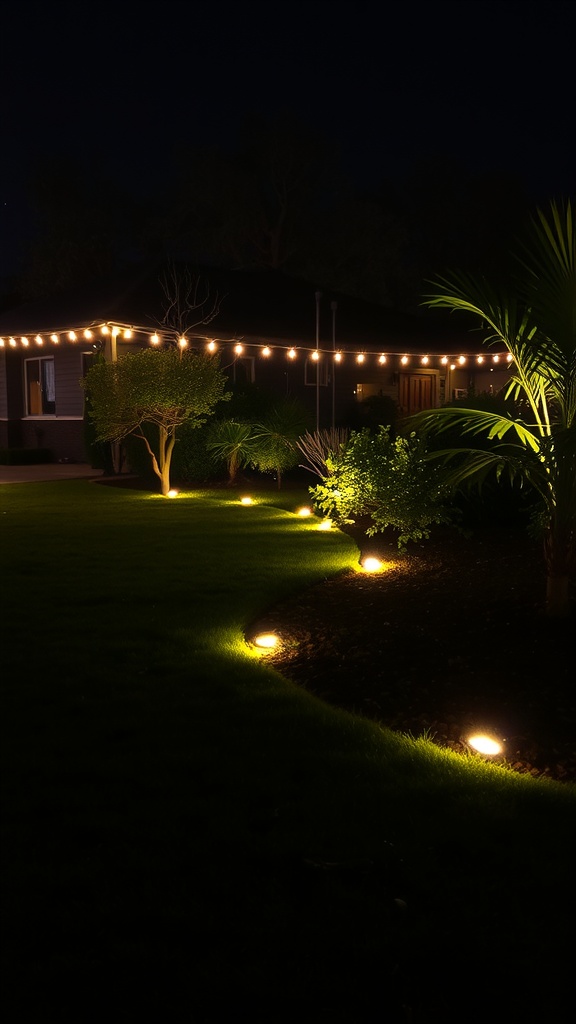
Using landscape lighting alongside lawn edging can really enhance your outdoor space. The image shows a beautifully lit yard where the soft glow of lights outlines the garden’s curves. This not only highlights the edging but also creates a warm and inviting atmosphere.
When you install lights along your lawn edges, it draws attention to the design of your garden. The lights can illuminate pathways and flower beds, making them stand out at night. This is perfect for evening gatherings or simply enjoying your yard after sunset.
Consider using low-voltage lights for safety and energy efficiency. They can be placed in strategic spots to highlight specific features like trees or shrubs. This combination of edging and lighting not only beautifies your yard but also adds functionality, guiding guests through your outdoor space.
Choosing the Right Height for Edging
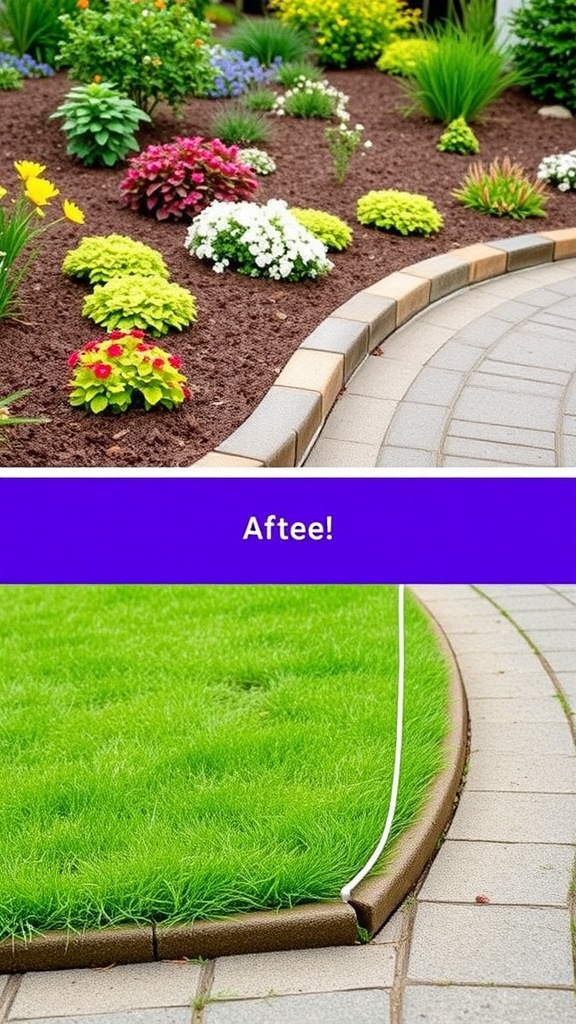
When it comes to lawn edging, height plays a big role in both function and style. The image showcases a beautifully manicured lawn with a defined edge, creating a clear boundary between the grass and flower beds. This not only enhances the look of your yard but also helps keep grass from invading your garden space.
Choosing the right height for your edging can depend on a few factors. If you want a clean, modern look, a lower edge might be ideal. It keeps everything neat and tidy. On the other hand, a taller edge can add a more dramatic flair, especially if you have vibrant flowers or plants that you want to showcase.
Think about the overall design of your yard. If your garden features taller plants, a higher edge can help frame them nicely. If your plants are more low-profile, a shorter edge can keep the focus on the greenery without overwhelming it. The right height can really tie your landscaping together.
Also, consider maintenance. Taller edges may require more upkeep to keep them looking sharp, while shorter ones can be easier to manage. Ultimately, the choice is yours, but finding that perfect height can make a big difference in your lawn’s appearance.
Edging for Pathways and Walkways
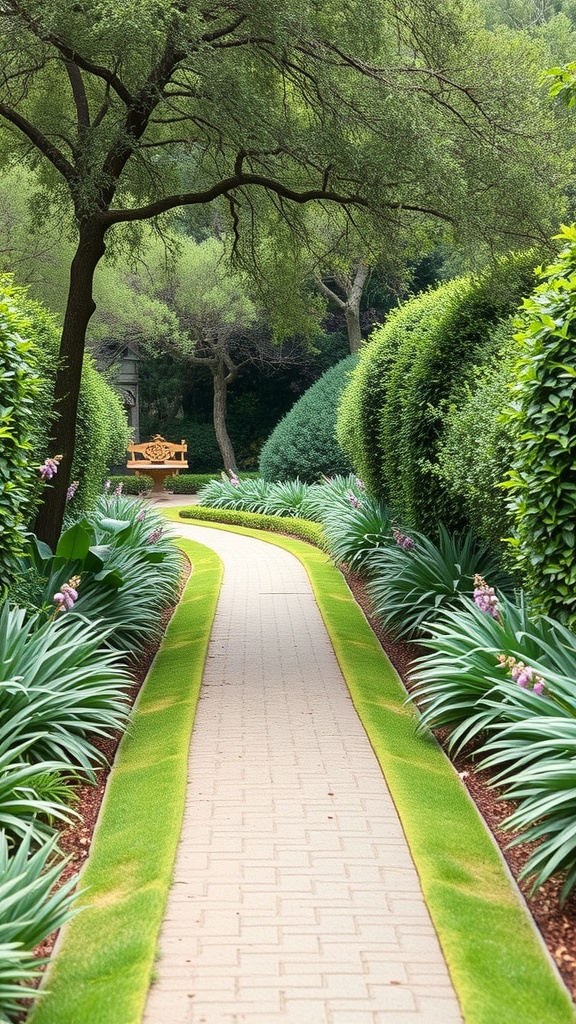
Creating a beautiful pathway is more than just laying down stones or bricks. It’s about framing the path to make it inviting and visually appealing. The image shows a lovely walkway bordered by lush greenery, which enhances the overall look.
The soft, grassy edging along the path adds a touch of warmth. It contrasts nicely with the hard surface of the walkway, making it feel more connected to nature. This kind of edging not only looks good but also helps define the space, guiding visitors along the path.
Using plants as edging is a great idea. They can soften the edges and add color throughout the seasons. In the image, you can see flowering plants that bring life to the area. This combination of hardscape and softscape creates a balanced and harmonious look.
When planning your own pathways, think about how you want to use the space. Do you want it to be a simple stroll or a more elaborate garden experience? The right edging can set the tone for the entire area.
Using Edging to Define Flower Beds
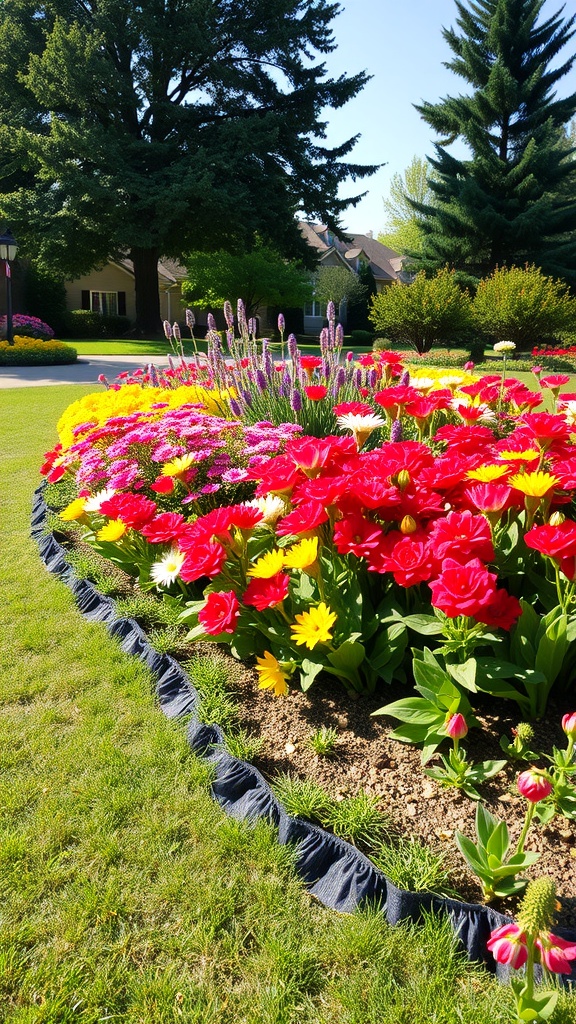
Edging is a simple way to make your flower beds pop. In the image, you can see a vibrant display of flowers bordered by a neat edge. This creates a clear line between the garden and the lawn, making everything look tidy.
The flowers in the bed are bursting with color, showcasing reds, yellows, and whites. This lively mix draws the eye and adds charm to the yard. The edging helps to highlight this beauty by providing a defined space for the flowers to thrive.
Using materials like stone, wood, or even fabric can enhance the look of your flower beds. The edging not only looks good but also helps keep grass and weeds from invading the flower space. It’s a practical solution that adds style.
When planning your flower beds, think about how the edging will complement your plants. A well-defined edge can make a small garden feel more spacious and organized. So, whether you’re planting a few flowers or creating a grand display, edging is a great way to define your flower beds.
DIY Lawn Edging Projects
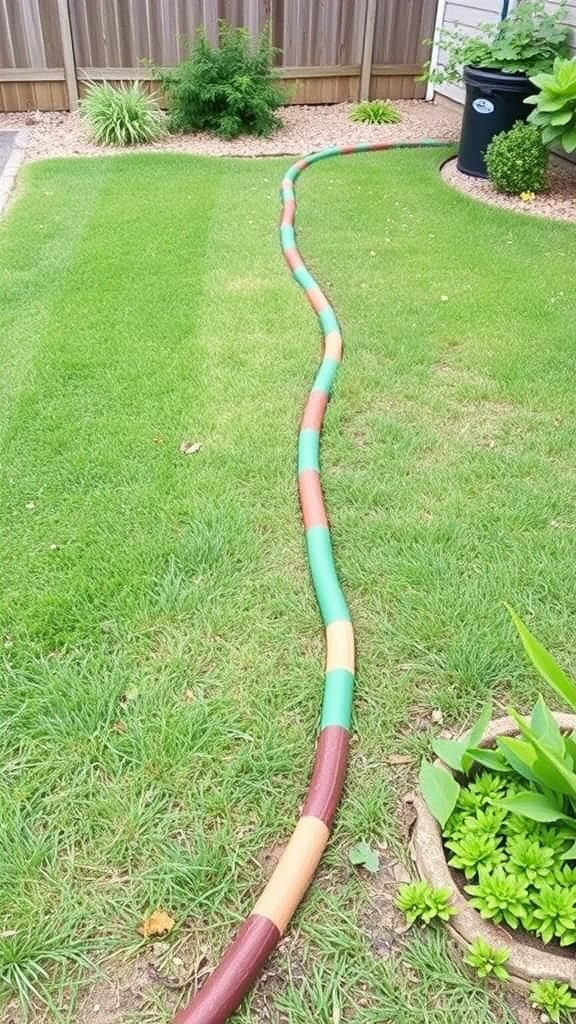
Lawn edging is a fun way to define your garden spaces and add a personal touch to your yard. The image shows a creative approach to lawn edging using colorful materials that create a winding path through the grass. This not only adds visual interest but also helps keep your lawn and garden areas neatly separated.
Using materials like painted stones, bricks, or even recycled items can make your edging project unique. The colors in the image suggest a playful vibe, making it perfect for a family-friendly yard. You can easily replicate this idea by choosing colors that match your home or garden theme.
To start your DIY lawn edging project, gather your materials and plan the layout. You can use a garden hose to outline the shape you want before setting your edging in place. This method allows you to visualize how it will look and make adjustments as needed.
Once you’re happy with the shape, secure your edging materials in the ground. This will help prevent them from shifting over time. Finally, take a step back and admire your handiwork. A well-defined edge can transform your outdoor space and make it feel more inviting.
Seasonal Lawn Edging Tips
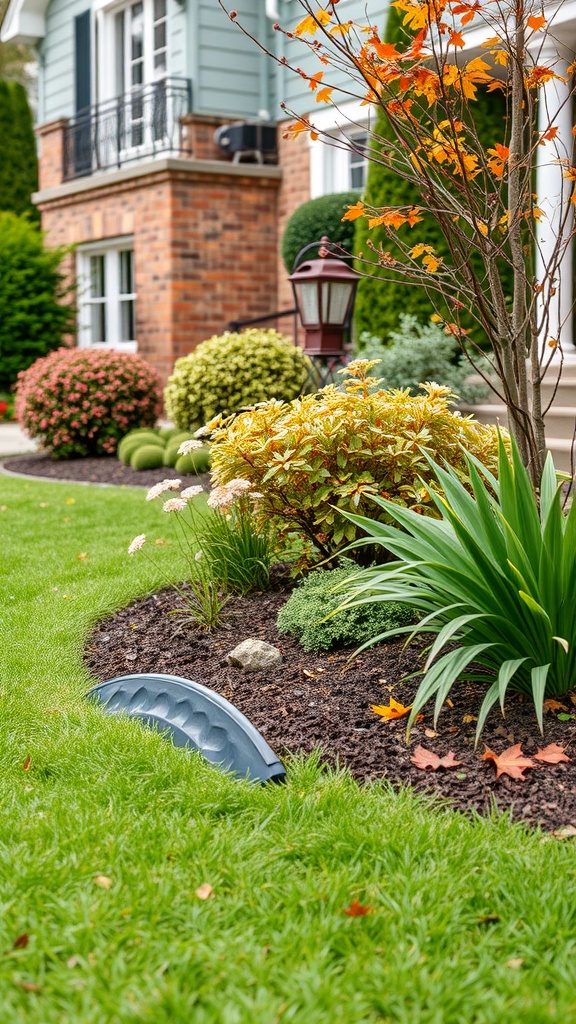
Lawn edging is a simple way to enhance your yard’s appearance. It creates a clear boundary between your grass and flower beds, making everything look neat and tidy. In the image, you can see a lovely garden with colorful plants and a well-defined edge. This not only adds beauty but also helps keep grass from invading your flower beds.
As seasons change, so do your lawn edging needs. In spring, it’s a great time to refresh your edges. Remove any debris and consider adding new mulch. This helps retain moisture and gives your plants a boost. Summer is about maintenance. Keep the edges crisp by trimming any overgrown grass. Regular upkeep prevents weeds from taking hold.
When fall arrives, it’s time to prepare for winter. Clean up fallen leaves and consider using decorative stones or bricks for a more robust edge. This adds a touch of style while protecting your garden. Finally, in winter, focus on protecting your edges. Heavy snow can damage plants, so using burlap or other materials can help shield them.
Edging Ideas for Vegetable Gardens
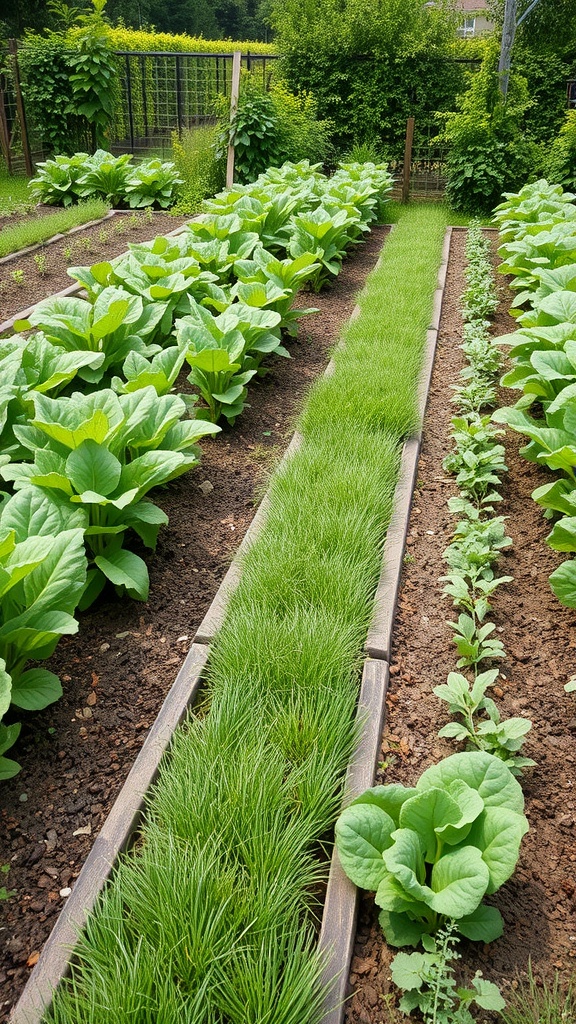
Creating a vegetable garden is a rewarding experience, and edging can enhance its look and function. The image shows a well-organized garden with lush green plants and a grassy path in between. This setup not only looks appealing but also helps in maintaining the garden.
Using natural materials for edging, like wood or stone, can define your garden beds. The wooden borders in the image keep the soil in place and create a clear separation between different plants. This makes it easier to manage your garden and adds a rustic charm.
Another idea is to use grass as a pathway, as seen in the image. It provides a soft surface to walk on while keeping weeds at bay. Plus, it adds a touch of greenery that complements the vegetable plants beautifully.
Consider incorporating low-growing herbs or flowers along the edges for added color and texture. This not only enhances the visual appeal but can also attract beneficial insects to your garden.
Innovative Edging Solutions for Sloped Yards
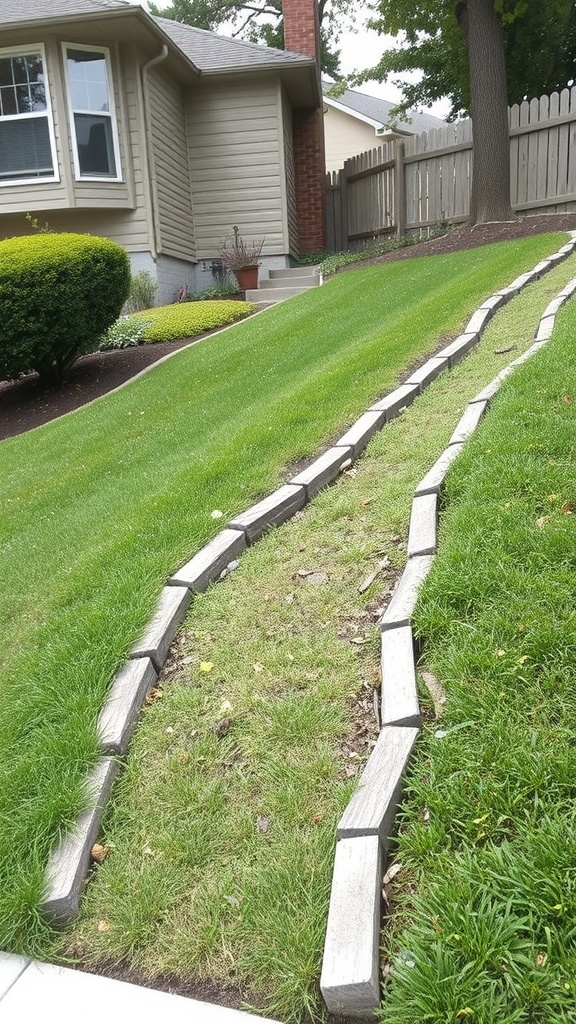
Sloped yards can be tricky to manage, but innovative edging solutions make them more functional and visually appealing. The image shows a creative approach to lawn edging on a slope. The use of curved wooden blocks creates a clear boundary between the grass and the bare soil, helping to prevent erosion.
This design not only looks great but also serves a practical purpose. The edging keeps the grass contained, making it easier to maintain. It also guides rainwater runoff, which is crucial for preventing soil erosion on sloped areas.
Using materials like wood or stone can add a natural touch to your landscape. The gentle curves of the edging complement the slope, creating a harmonious look. This approach is perfect for homeowners looking to enhance their outdoor spaces without overwhelming them.
Incorporating plants along the edges can further improve the aesthetics and functionality. Low-growing plants can help stabilize the soil while adding color and texture. Overall, innovative edging solutions transform sloped yards into beautiful, manageable spaces.
Edging Styles to Complement Your Home
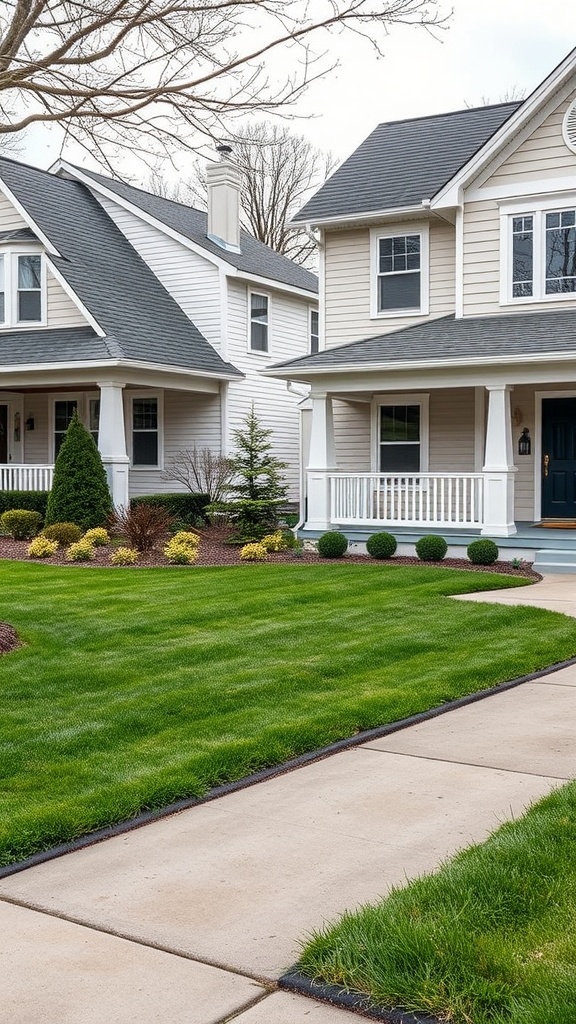
Lawn edging is a simple yet effective way to enhance your home’s curb appeal. The image shows two charming houses with neatly manicured lawns. The edging creates a clear boundary between the grass and the flower beds, giving the landscape a polished look.
There are various styles of lawn edging to consider. For a classic touch, stone or brick edging can add a timeless feel. On the other hand, metal or plastic options offer a modern twist and are often easier to install. Whichever style you choose, make sure it complements your home’s architecture.
In the image, the clean lines of the edging work well with the tidy lawns and well-placed shrubs. This combination not only looks good but also helps keep grass from invading flower beds. It’s a practical solution that adds beauty to your outdoor space.