
Creating a wildflower garden is a fun and rewarding way to bring a splash of color and life to your outdoor space. With just a few simple steps, you can turn any patch of ground into a beautiful haven for both blooms and beneficial pollinators. Here’s how to get started on your own wildflower garden journey!
Watering Your Wildflower Garden
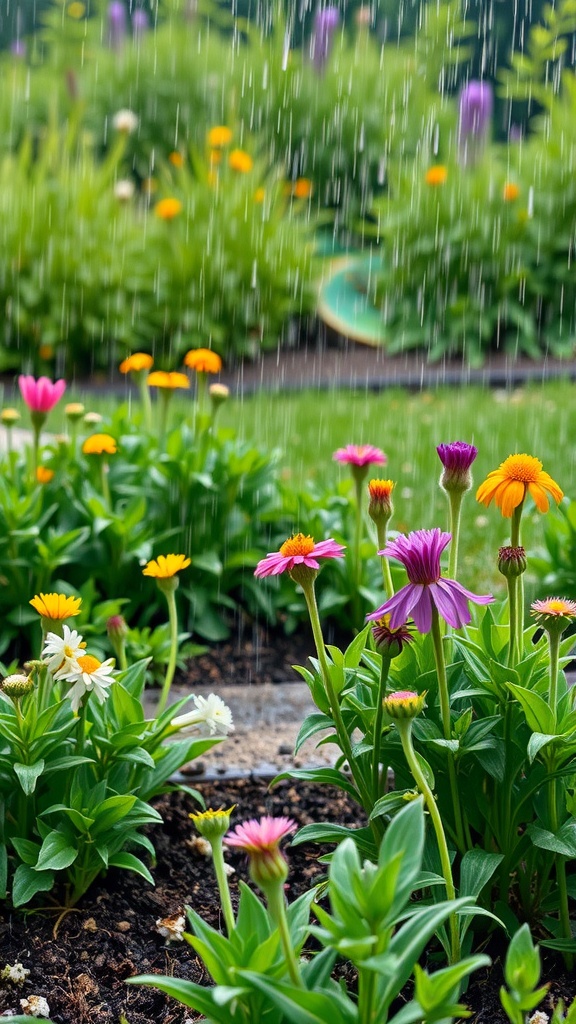
Watering your wildflower garden is a key step in helping those beautiful blooms thrive. In the image, you can see vibrant flowers being nourished by gentle rain. This natural watering method is ideal as it allows plants to soak in moisture without overwhelming them.
When caring for your wildflowers, aim to provide them with about an inch of water per week, either through rainfall or manual watering. Early morning is the best time for watering, as it allows plants to absorb moisture before the heat of the day sets in.
Observe how your plants respond. If they start to droop or show signs of wilting, it’s time to step in. On the flip side, if you notice standing water, you may be overwatering.
Remember, different wildflower types have varying water needs. Native species usually require less water once established, while others may need a bit more. Trust your instincts and pay attention to how your garden looks. Happy watering!
Preparing the Soil for Planting
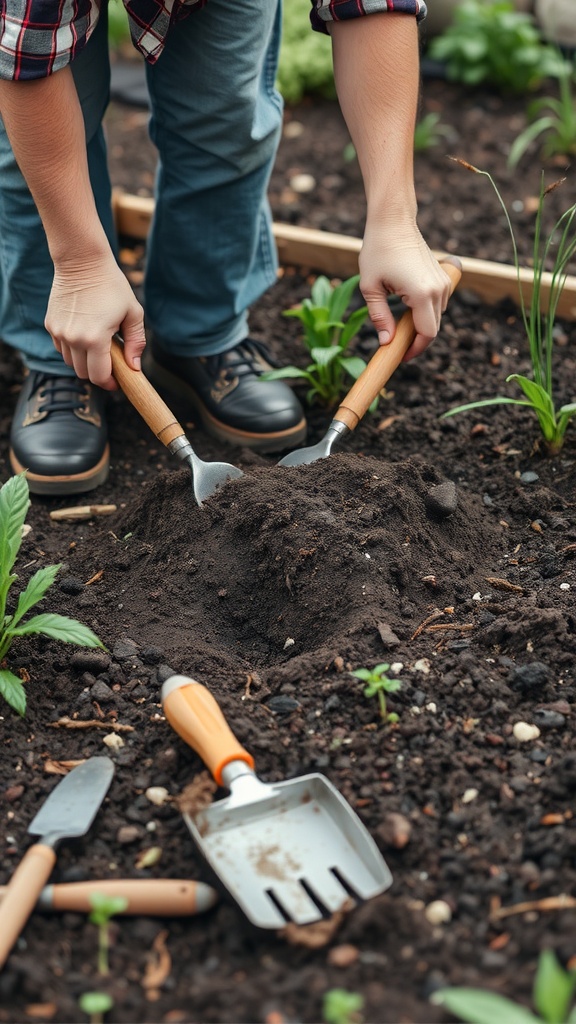
Before you plant your wildflower garden, the first step is preparing the soil. Look at the image: a person is digging into rich, dark soil with two tools, ready to create a beautiful space for flowers. Healthy soil is key for strong plant growth.
Start by removing any weeds or debris from the area. This gives your wildflowers a clean slate to grow. Next, loosen the soil using a spade or garden fork, just like the person in the photo. This helps the roots breathe and absorb water better.
You might also want to mix in some compost. Compost adds nutrients and improves soil structure, making it easier for plants to thrive. Just spread a layer of compost over the soil and mix it in. Your wildflowers will thank you!
Creating a Pollinator-Friendly Environment
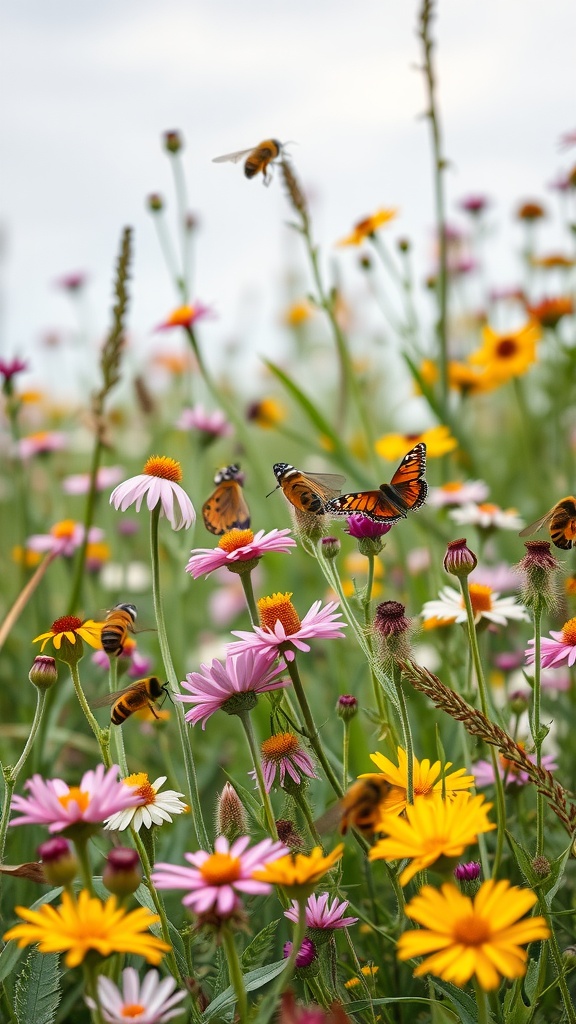
Creating a wildflower garden is a wonderful way to support pollinators like bees and butterflies. These creatures play a key role in our ecosystem, helping plants reproduce and maintain healthy environments. A vibrant garden filled with colorful blooms invites these essential insects to visit.
In the image, we see a lively scene with various wildflowers in full bloom. Bright yellows and soft pinks create a cheerful landscape. You can spot bees buzzing around, collecting nectar, while butterflies flutter gracefully from flower to flower. This type of setting not only adds beauty to your garden but also provides a safe haven for pollinators.
To create a pollinator-friendly space, choose native flowers that attract local species. Flowers like coneflowers, black-eyed Susans, and daisies are excellent picks. Plant in clusters to make it easier for pollinators to find them. Providing a mix of flower shapes and colors will also help attract a diverse range of insects.
Water sources are important too. Adding a shallow dish with water and some stones allows bees and butterflies to stay hydrated. Avoid pesticides, as these can harm pollinators. Instead, embrace natural gardening practices that promote a healthy ecosystem. Your wildflower garden will not only support pollinators but also bring joy and beauty to your outdoor space.
Dealing with Weeds in Your Wildflower Garden
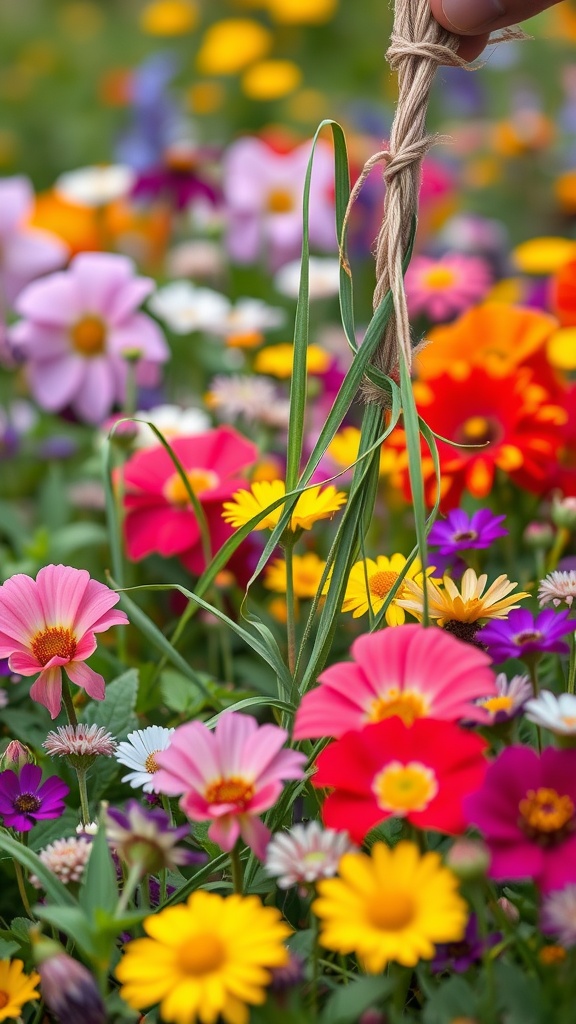
Having a wildflower garden adds beauty and attracts wildlife, but weeds can be a real nuisance. The image shows someone holding a piece of twine while gently pulling a weed from a colorful patch of wildflowers. This moment captures the essence of keeping your garden healthy and vibrant.
First, it’s helpful to identify the weeds in your garden. Some may be easy to pull, while others have deep roots that might need more effort. It’s best to tackle weeds when the soil is moist, making them easier to remove.
Another tip is to use mulch around your flowers. Mulch not only adds a nice look but also keeps weeds at bay. It blocks sunlight, which many weeds need to grow. Plus, it helps retain moisture in the soil.
Regular maintenance is key. Set aside some time each week to check for weeds. If you spot them early, they’re much easier to manage. And remember, pulling weeds by hand can be great exercise and a way to connect with your garden.
Lastly, try planting your wildflowers closer together. This technique can shade the soil and make it harder for weeds to take root. The combination of colorful blooms and less competition from weeds will create a thriving garden.
Planting Techniques for Wildflower Seeds
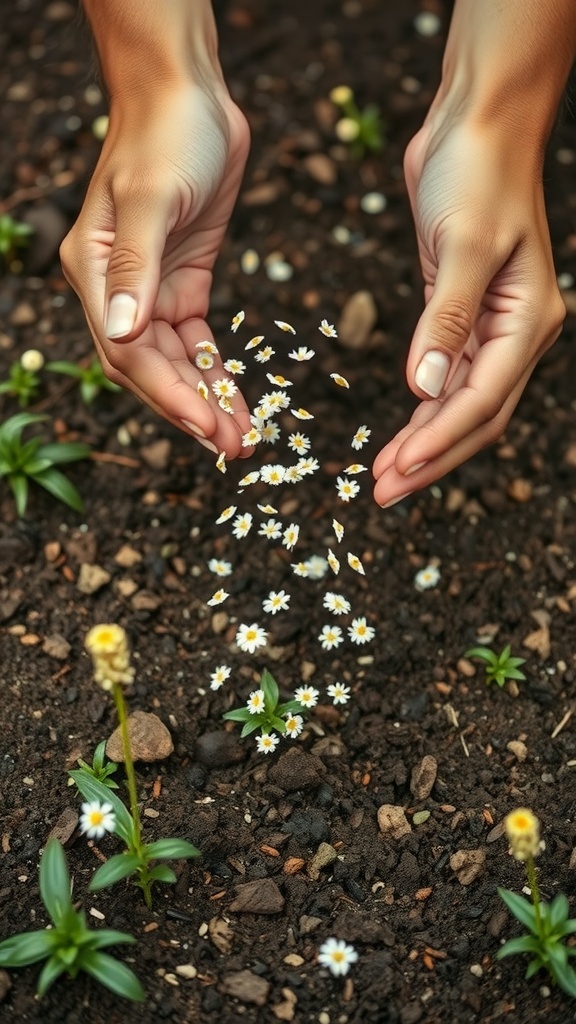
When planting wildflowers, the right techniques can make a big difference. The image shows hands gently scattering seeds over the soil, a method often used for wildflower planting.
Start by preparing your soil. Loosen it up to make it easy for the seeds to settle in. This creates a welcoming environment for growth. Spread the seeds evenly, like in the photo, to avoid overcrowding. This helps each flower get the space they need to flourish.
Water the area gently after planting. It’s important to keep the soil moist, not soaked, especially in the early days. This encourages the seeds to germinate and sprout. Regular watering will help your wildflower garden thrive.
Finally, be patient! Wildflowers may take some time to bloom. Enjoy the process of watching your garden transform into a beautiful display of colors.
Maintaining Your Wildflower Garden
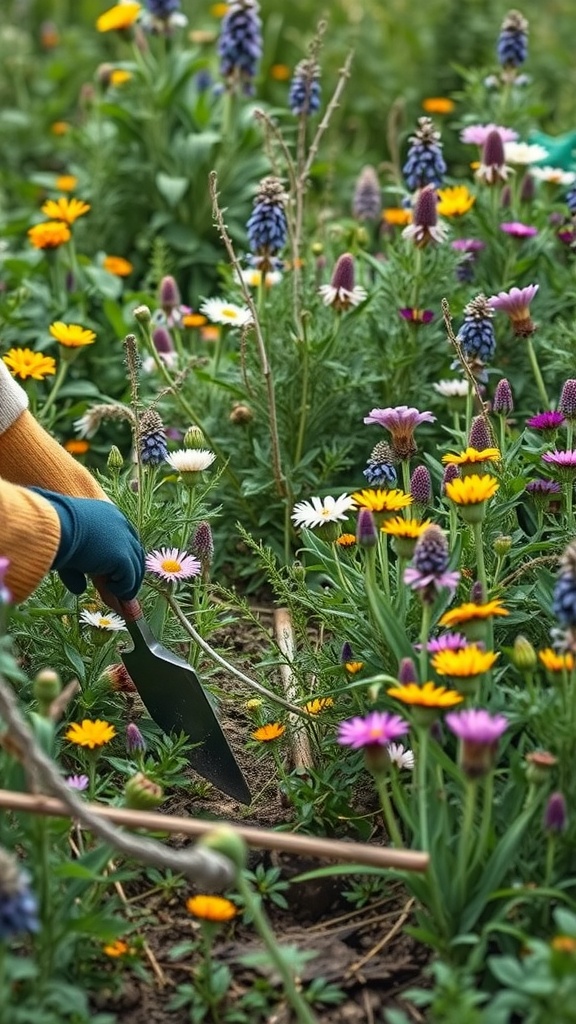
Maintaining a wildflower garden can be enjoyable and rewarding. The image shows a gardener tending to vibrant flowers, which is a great reminder of the beauty and joy such a garden can bring. Regular care helps keep the garden healthy and blooming.
Start by checking your plants often. Look for weeds that might compete for resources. A quick pull can keep them at bay. Be gentle with the roots of your wildflowers while you work.
Watering is another key part of maintenance. Wildflowers generally prefer well-draining soil. Ensure they get enough moisture, especially during dry spells. A little attention can make a big difference!
Lastly, don’t forget to enjoy the blooms! Take time to appreciate your hard work. A wildflower garden not only supports pollinators but also brightens your space with color. It’s a simple way to connect with nature.
Selecting Native Wildflower Species
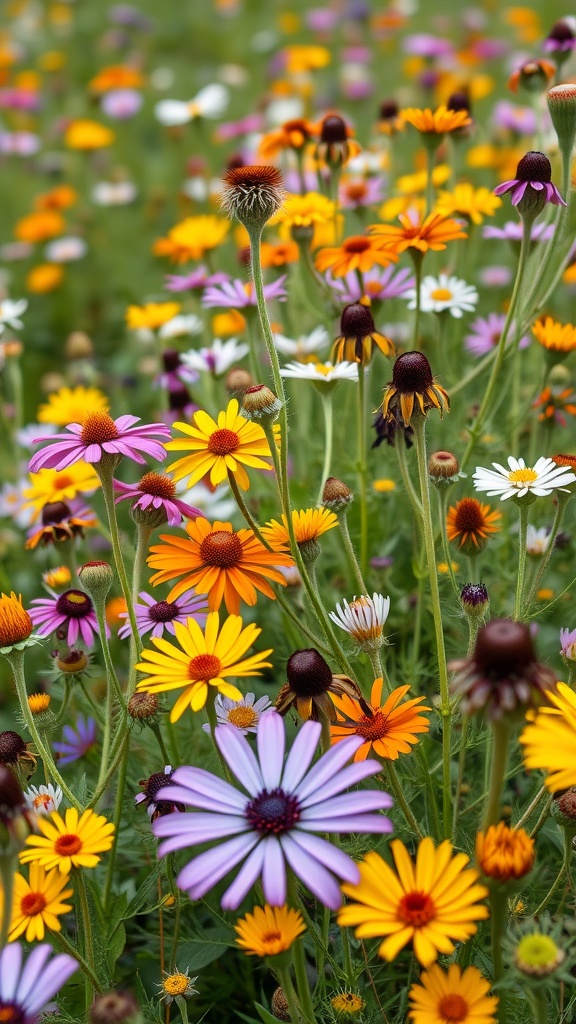
Choosing the right wildflower species is a key step in creating a successful garden. Look for flowers that naturally thrive in your area. Native plants are better adapted to the local climate and soil, which makes them easier to grow.
The image shows a stunning mix of wildflowers in various colors. These vibrant blooms not only attract pollinators but also add beauty to any garden space. When selecting species, think about how each flower contributes to the overall look and feel of your garden.
Consider the height and blooming times of different flowers. This way, you can ensure a continuous display of color throughout the growing season. Mixing taller and shorter species creates visual interest and layers. Don’t forget to research which flowers do well together, as some may compete for nutrients.
Lastly, consider your garden’s purpose. If you want to attract bees and butterflies, select flowers known for their appeal to these pollinators. A wildflower garden can be a vibrant addition to your landscape, providing both beauty and ecological benefits.
Choosing the Right Location for Your Wildflower Garden
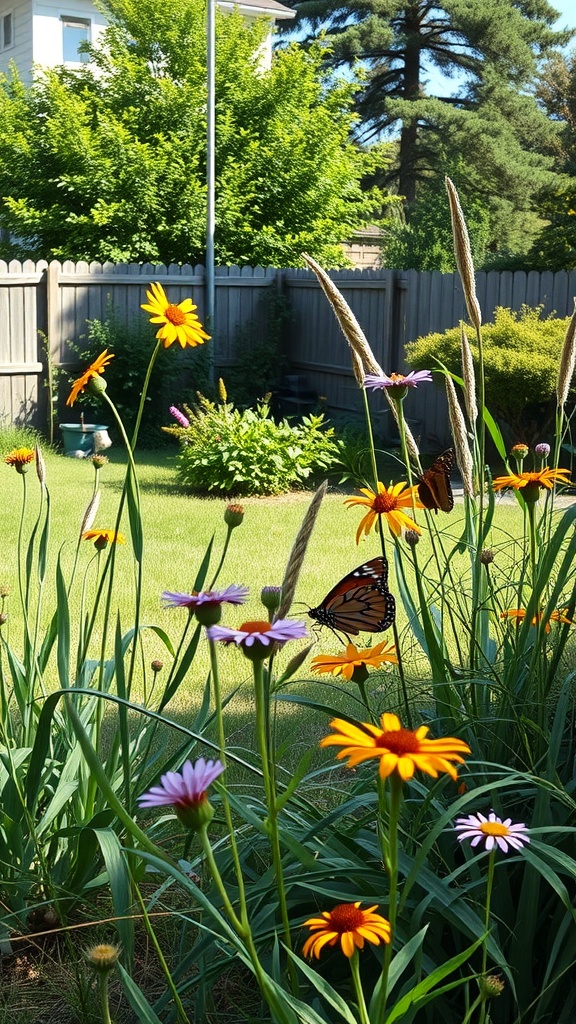
Picking the right spot for your wildflower garden is super important. You want an area that gets plenty of sunlight. Most wildflowers thrive in full sun, so aim for a location that enjoys at least six hours of direct sunlight each day.
The image shows a vibrant garden filled with colorful wildflowers and even a butterfly enjoying the blooms. This kind of lively scene can be achieved by selecting a sunny and open space. Also, consider the soil quality. Wildflowers often prefer well-draining soil, so avoid areas where water tends to pool.
Another thing to think about is accessibility. Make sure your garden is easy to reach for planting and maintenance. A location near your home can also provide a wonderful view from your windows.
Last but not least, pay attention to the surrounding environment. If you have trees or tall buildings nearby, they might cast shadows that can affect how much light your flowers get. Choose a location that is open and inviting, just like the one in the picture, filled with happy blooms and fluttering butterflies.
Understanding Seasonal Growth Patterns
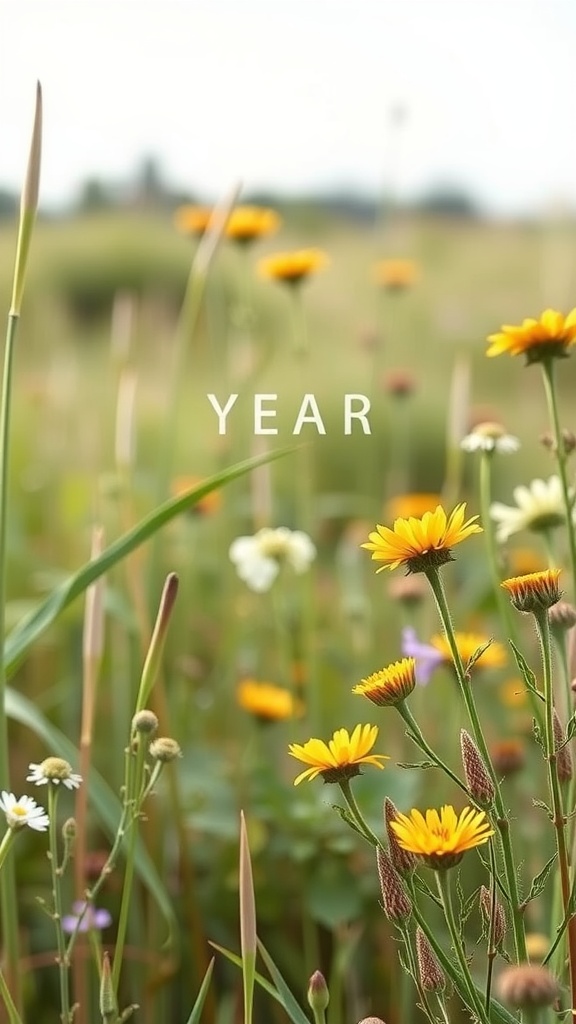
When planting a wildflower garden, understanding how plants grow through the seasons is key. Each flower has its own rhythm, starting to bloom at different times throughout the year. In spring, many wildflowers burst into color, welcoming warmer weather. Summer brings a vibrant display, as more species come to life. As autumn approaches, some flowers begin to fade while others may still thrive, adding unique beauty to your garden. This natural cycle not only adds diversity but also attracts various pollinators, making your garden a lively spot. Watching this seasonal dance can be rewarding, as you witness new blooms and changing landscapes in your garden.
Harvesting Seeds for Future Gardens
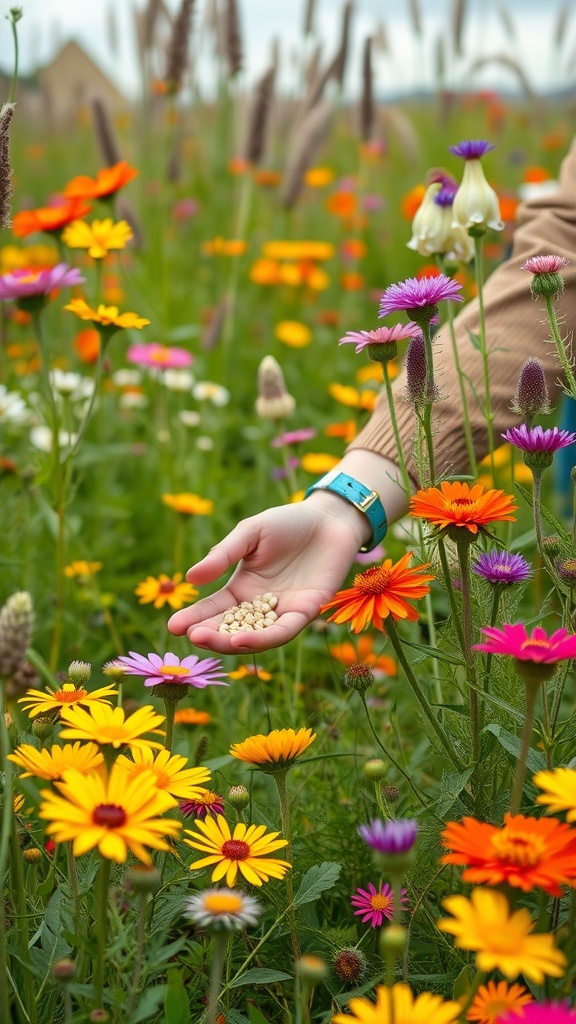
Harvesting seeds is a fun and rewarding part of gardening. In the image, you can see a hand holding a handful of seeds surrounded by a colorful array of wildflowers. This vibrant setting showcases the beauty of a wildflower garden, where you can find a mix of yellows, pinks, and purples.
To collect seeds, choose flowers that have dried completely. Gently shake or tap the flower heads to release the seeds into your hand. Make sure to collect seeds from healthy plants to ensure strong growth next season.
Once you have your seeds, store them in a cool, dry place. Using small envelopes or jars can help keep them organized and protected. Label each container with the flower variety and date of collection. This way, you’ll know what to expect when planting time arrives.
Remember, every seed you save can contribute to a more beautiful garden in the future. So, grab those seeds and get ready to create another stunning display of wildflowers!
Attracting Birds and Beneficial Insects
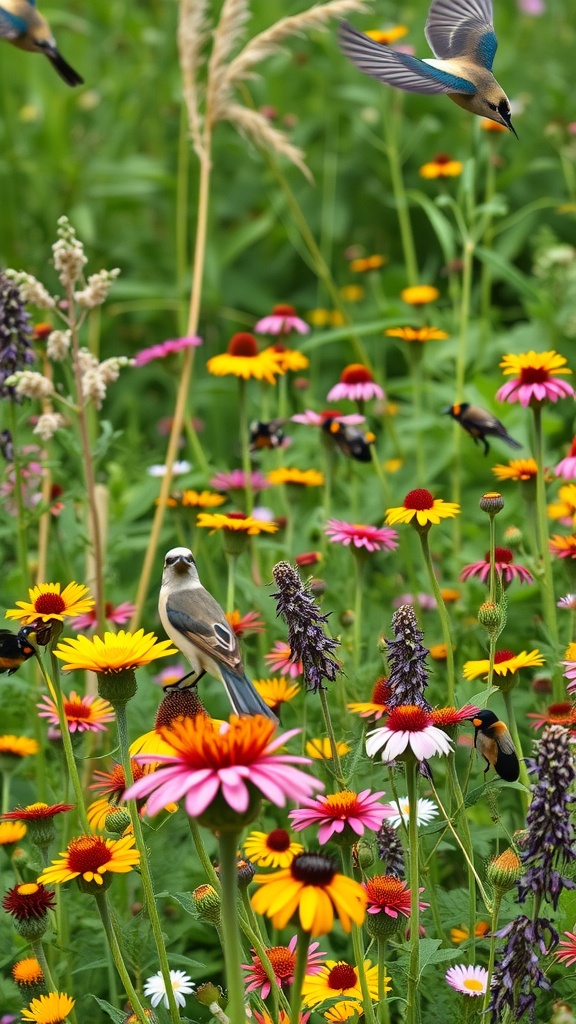
A wildflower garden is a perfect way to welcome birds and beneficial insects. When you plant a variety of colorful flowers, you create a buzzing paradise for these creatures. Look at the image filled with vibrant blooms, where birds flit about, enjoying the rich offerings. This lively scene shows just how inviting a garden can be.
To attract birds, consider flowers that produce seeds, like sunflowers and coneflowers. These plants not only brighten your garden but also provide food for feathered visitors. Notice how the flowers in the image are a feast for both birds and insects, creating a lively ecosystem.
Beneficial insects like bees and butterflies will also love a wildflower garden. They help with pollination, which is vital for growing more flowers. Planting flowers in clusters can make it easier for them to find food. The stunning hues you see in the photo aren’t just pretty; they’re a beacon for these important helpers.
Incorporate native plants to ensure your garden attracts local birds and insects. They will thrive and contribute to the balance of nature. This image perfectly illustrates how a wildflower garden can transform a space into a vibrant hub for wildlife. So grab some seeds and get started on your own beautiful wildflower haven!
Enjoying the Beauty of Your Wildflower Garden
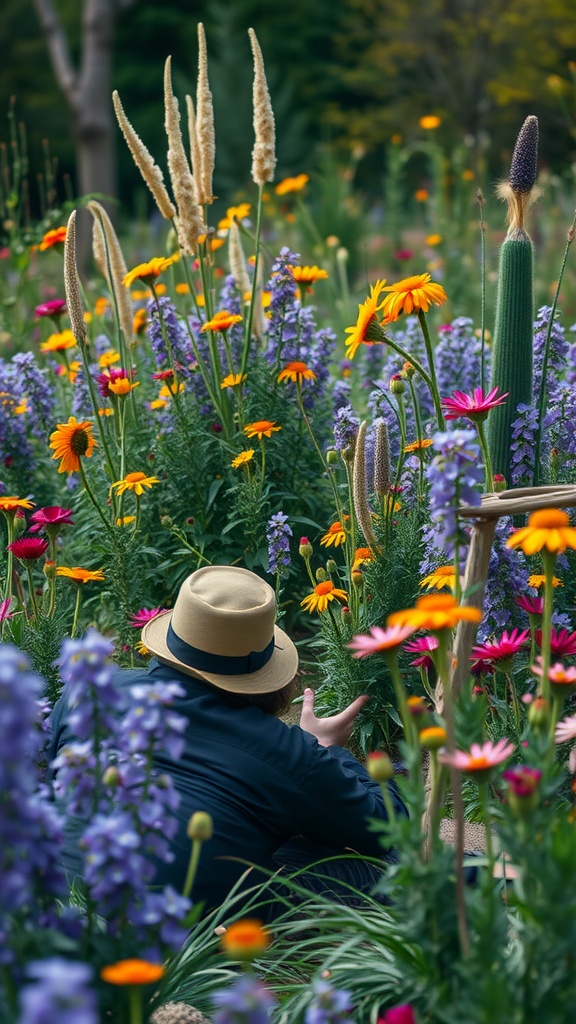
Creating a wildflower garden brings a burst of color and life to your outdoor space. Imagine stepping into a vibrant haven filled with various blooms swaying in the breeze. This image captures a moment of joy in a flourishing wildflower garden, where hues of purple, orange, and pink come together in harmony.
The person in the scene is fully engaged in their garden, perhaps tending to the flowers or simply soaking in the beauty around them. This connection with nature is a big part of what makes a wildflower garden so rewarding. Each flower represents not just beauty but also the effort and care put into nurturing the garden.
As you enjoy your garden, consider the little things that make it special. The sounds of bees buzzing, birds singing, and the gentle rustle of the leaves create a peaceful atmosphere. Take time to sit, relax, and just appreciate the beauty you’ve cultivated.