
Roof garden design is all about creating a green space high above the ground, turning underutilized rooftops into serene retreats that enhance both aesthetics and functionality. It combines plants, seating, and often innovative landscaping techniques to create a relaxing haven, improving air quality and offering a unique escape from urban life. These gardens can vary widely, from simple plant arrangements to elaborate setups complete with water features, making them perfect for personal expression and environmental benefits.
Lighting Solutions for Evening Ambiance
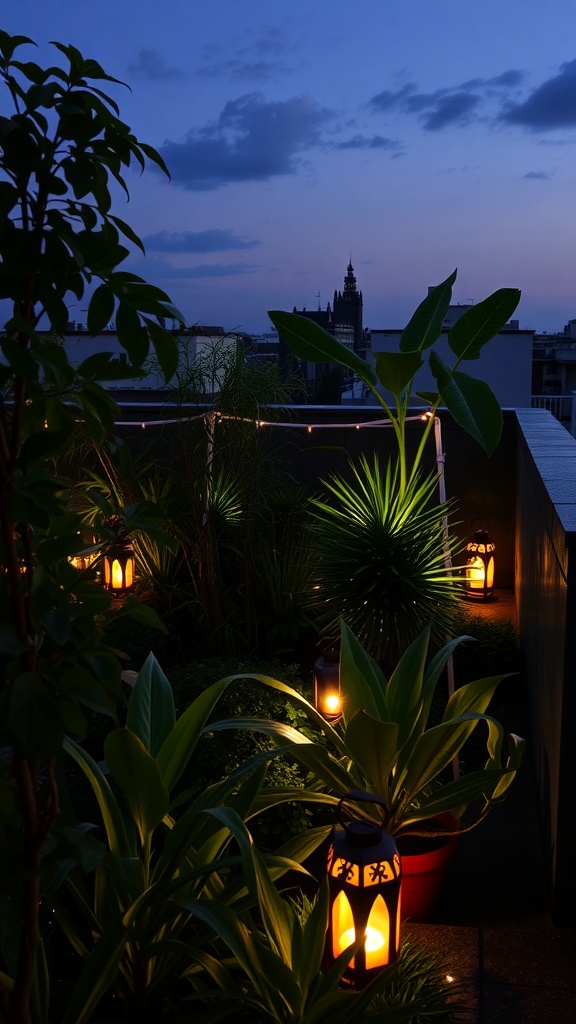
Creating a cozy atmosphere on your roof garden can be a delightful experience. The right lighting can transform your space into a magical retreat as the sun sets. In the image, warm lanterns glow softly among lush greenery, casting a gentle light that invites relaxation.
Using a mix of lighting sources is key. The lanterns in the picture add a charming touch, while string lights can enhance the overall vibe. Positioning lights among the plants not only highlights their beauty but also creates a warm, inviting glow.
Consider using solar-powered lights for an eco-friendly option. They charge during the day and illuminate your garden at night, making them a practical choice. With the right lighting, your roof garden can become a perfect spot for evening gatherings or quiet moments alone.
Choosing the Right Soil for Rooftop Gardens
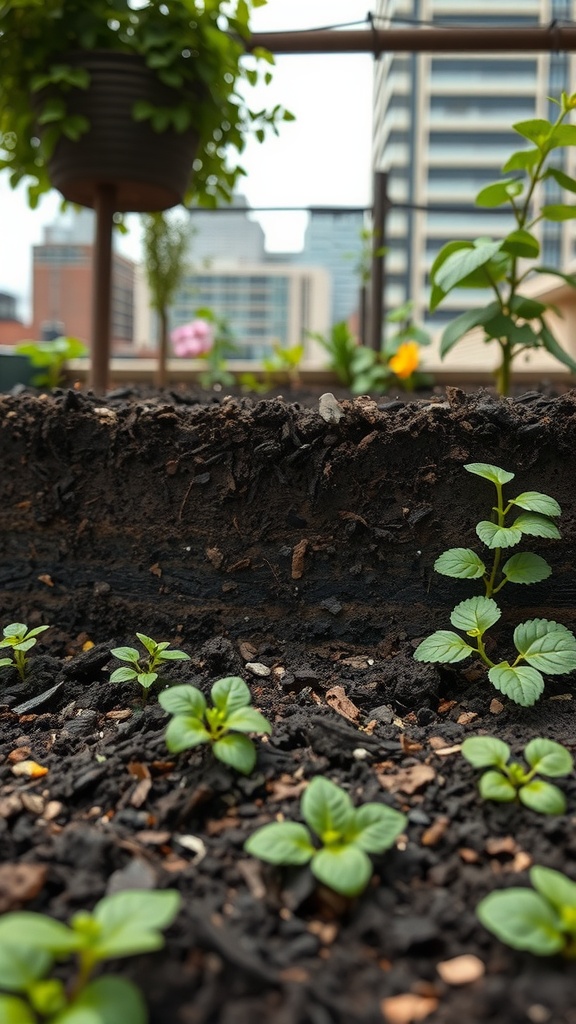
When setting up a rooftop garden, picking the right soil is key. The image shows young plants sprouting in rich, dark soil, which is a great start for any garden. Healthy soil supports plant growth and ensures they thrive in an urban environment.
Rooftop gardens face unique challenges like limited space and exposure to wind. Therefore, using lightweight soil mixes can help. These mixes often contain materials like coconut coir or perlite, which provide good drainage and aeration.
It’s also important to consider the nutrients in your soil. Adding organic matter, like compost, can boost the nutrient content. This helps your plants grow strong and healthy, as seen in the image with vibrant green leaves pushing through the soil.
Lastly, don’t forget about water retention. A good soil mix should hold moisture without becoming waterlogged. This balance is essential for rooftop gardens, where plants can dry out quickly under the sun.
Designing for Privacy with Green Walls
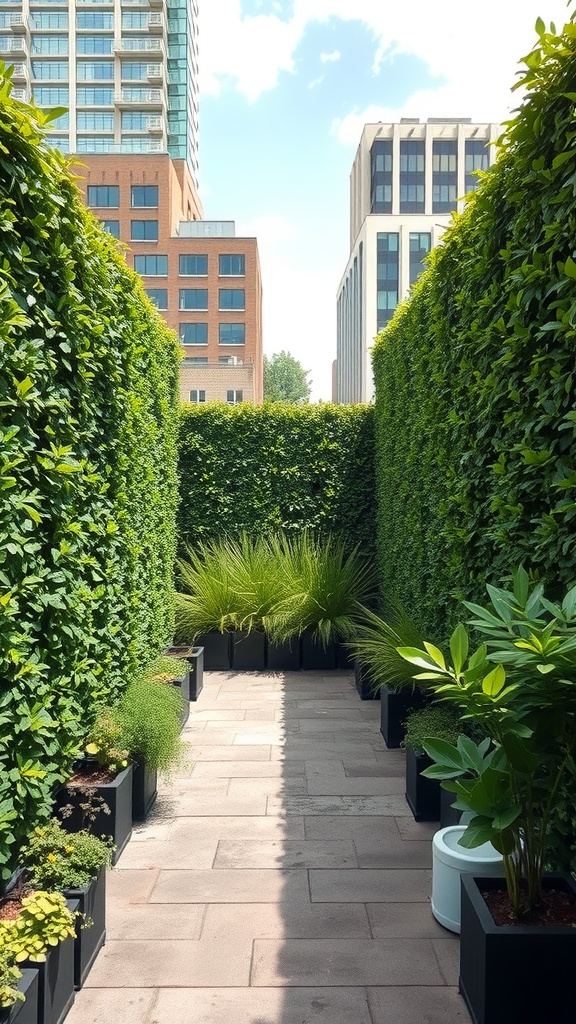
Creating a roof garden can be a wonderful way to enjoy nature in an urban setting. One effective way to enhance privacy is by using green walls. The image shows a narrow pathway flanked by lush greenery, providing a serene escape from the surrounding buildings.
The tall hedges create a natural barrier, making the space feel cozy and secluded. This design not only blocks out noise but also adds a refreshing touch to the environment. The vibrant plants in pots along the pathway add color and life, inviting you to stroll through this green haven.
Incorporating greenery in this way helps to soften the hard edges of city life. It’s a simple yet effective method to create a peaceful retreat right on your rooftop. Whether you want to relax with a book or entertain friends, a well-designed green wall can make all the difference.
Creating Cozy Seating Areas
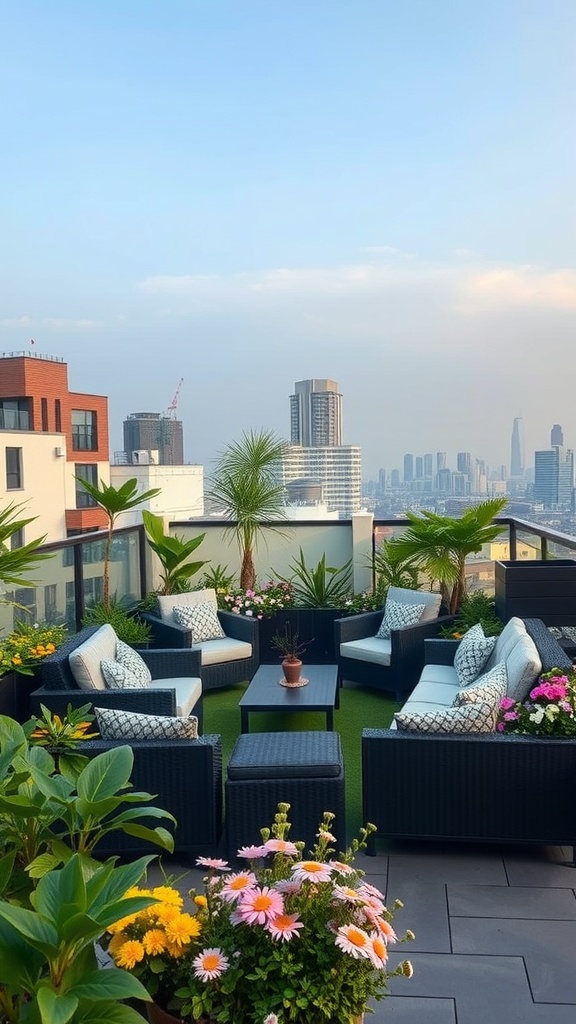
Creating a cozy seating area on your roof garden can transform it into a welcoming retreat. Imagine a space where you can relax, sip your morning coffee, or unwind after a long day. The image shows a lovely setup with comfortable chairs and a central table, perfect for gatherings or quiet moments.
The arrangement of the seating encourages conversation. With plush cushions and a stylish design, it invites you to sit back and enjoy the view. The surrounding greenery and colorful flowers add a touch of nature, making the space feel alive and vibrant.
Adding small details, like a potted plant on the table, enhances the cozy vibe. You can also consider using outdoor rugs to define the area and add warmth. This setup not only looks great but also feels inviting, making it a perfect spot for friends and family.
Incorporating Water Features
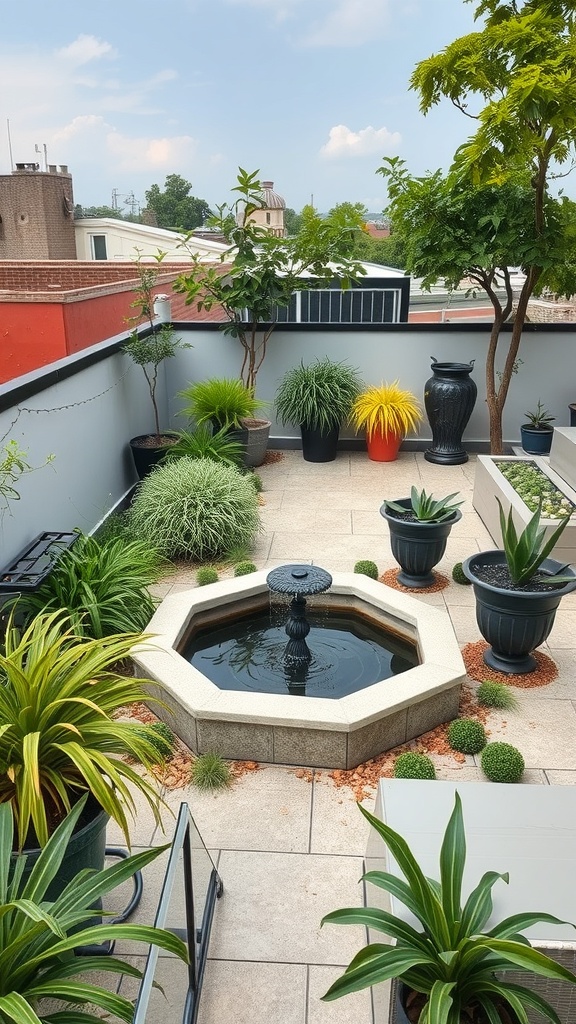
Water features can bring a unique charm to your roof garden. In the image, we see a lovely octagonal fountain surrounded by vibrant greenery. This setup creates a refreshing focal point that draws the eye and adds a soothing element to the space.
The gentle sound of flowing water can transform your rooftop into a peaceful retreat. It’s a great way to escape the hustle of city life. The fountain not only looks good but also helps to cool the air, making the garden more comfortable during hot days.
When planning your own roof garden, think about how a water feature can fit into your design. You can choose from various styles, whether it’s a small fountain like the one shown or a larger pond. The key is to ensure it complements your plants and overall theme.
Adding plants around the water feature, as seen in the image, enhances the natural feel. The mix of colors and textures from the foliage creates a vibrant atmosphere. Plus, it provides a habitat for birds and beneficial insects, making your garden even more lively.
Maximizing Space with Vertical Gardening
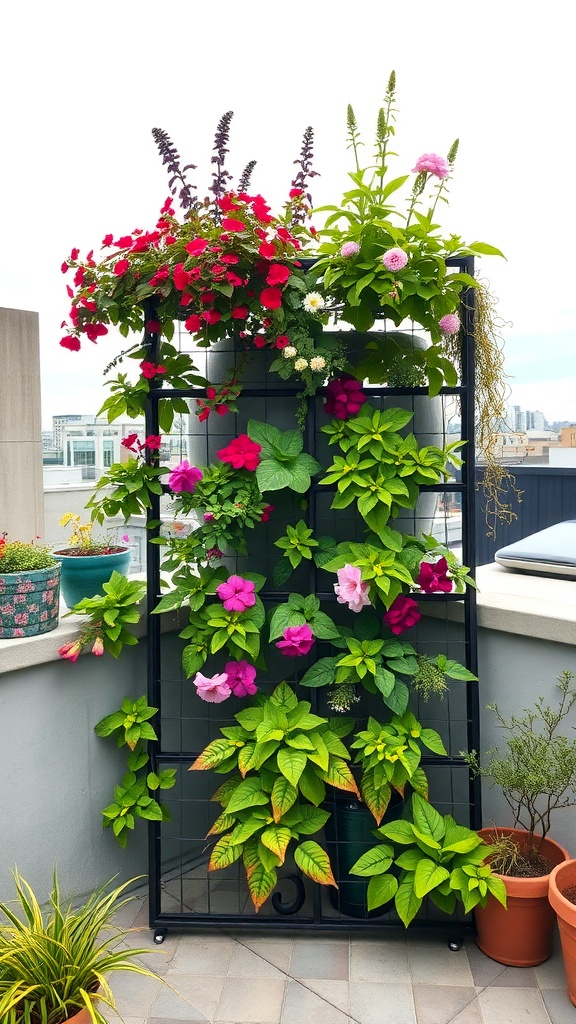
Vertical gardening is a fantastic way to make the most of limited space, especially in a roof garden. The image showcases a beautifully arranged vertical garden that brings life to an otherwise unused wall. With vibrant flowers and lush greenery, it transforms a simple structure into a stunning focal point.
This setup not only adds beauty but also maximizes the available area. By growing plants upwards, you can fit more greenery into a smaller footprint. The use of different plant types, from colorful flowers to leafy greens, creates a dynamic and inviting atmosphere.
Incorporating vertical gardening can also improve air quality and provide a habitat for local wildlife. It’s a win-win for both aesthetics and the environment. Whether you’re a seasoned gardener or just starting out, this approach is both practical and rewarding.
Using Native Plants for Sustainability
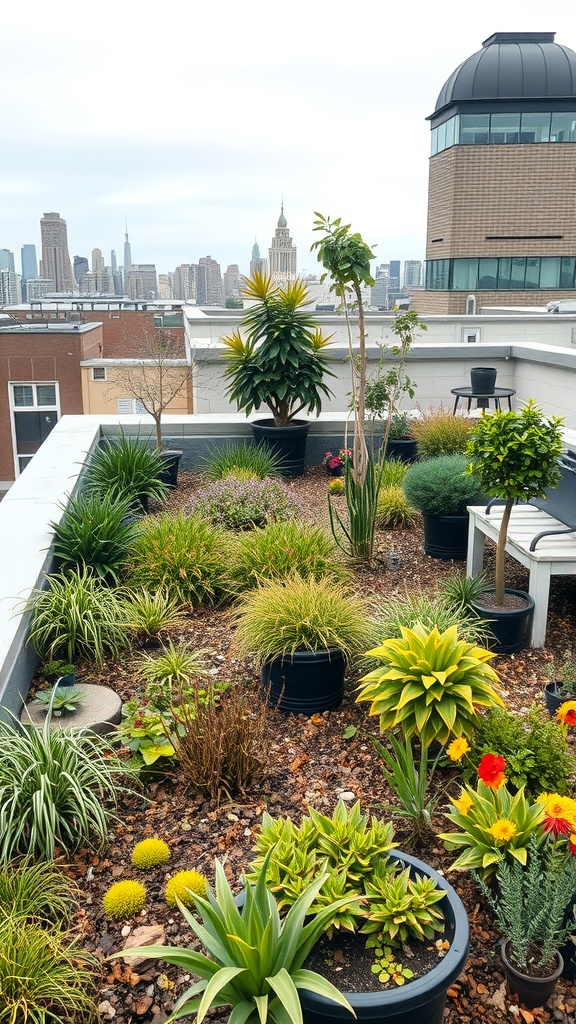
Creating a roof garden is a fantastic way to bring nature into urban spaces. The image shows a vibrant rooftop garden filled with various plants, each contributing to a sustainable environment. Using native plants is a smart choice for these gardens.
Native plants are well adapted to the local climate and soil. They require less water and maintenance compared to non-native species. This makes them perfect for rooftop gardens, where resources can be limited. In the image, you can see a mix of lush greenery and colorful flowers, showcasing how native plants can thrive even in small spaces.
Another benefit of native plants is their ability to attract local wildlife. Birds, butterflies, and beneficial insects are drawn to these plants, creating a lively ecosystem right on your roof. This not only enhances the beauty of the garden but also supports biodiversity.
Incorporating native plants into your roof garden design can also help with stormwater management. Their deep roots allow for better water absorption, reducing runoff and helping to keep the city cooler. The plants in the image seem to be arranged thoughtfully, maximizing both aesthetic appeal and environmental benefits.
Integrating Edible Plants and Herbs
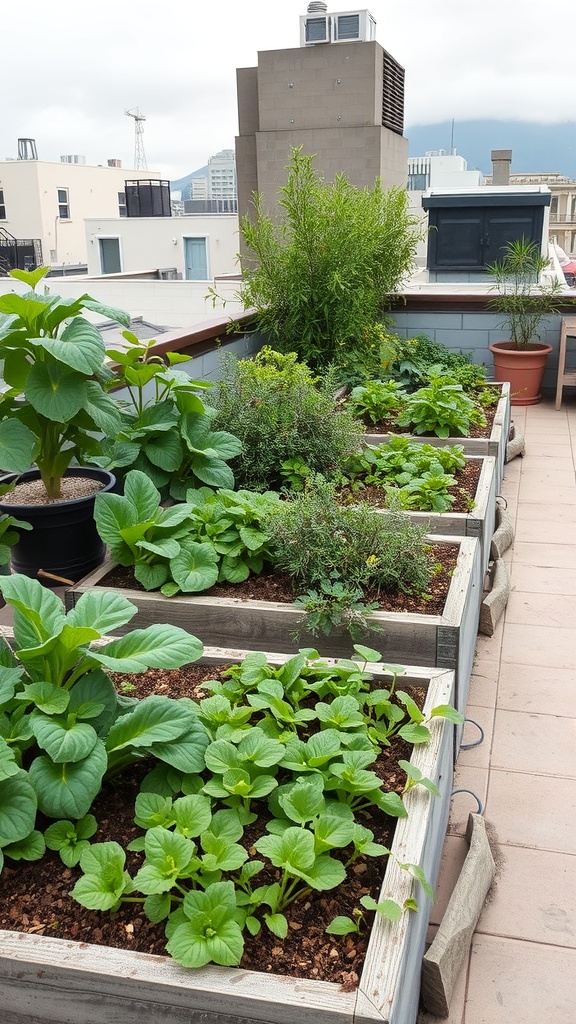
Creating a roof garden with edible plants and herbs can be both fun and rewarding. The image shows a vibrant rooftop garden filled with various greens and herbs. These plants not only beautify the space but also provide fresh ingredients for your meals.
Incorporating edible plants like lettuce, herbs, and even some vegetables can turn your rooftop into a mini farm. Imagine stepping outside to pick fresh basil for your pasta or lettuce for a salad. It’s a great way to enjoy homegrown flavors right in the city.
When planning your garden, consider the types of plants that thrive in your climate. Some herbs, like rosemary and thyme, are hardy and can flourish in smaller spaces. Leafy greens, such as spinach and arugula, grow quickly and can be harvested multiple times.
Using raised beds, like those in the image, helps with drainage and makes it easier to manage your plants. Plus, they add a nice touch to the overall design. Don’t forget to include some pots for herbs that can be placed around the garden for easy access.
Creating Pathways and Flow
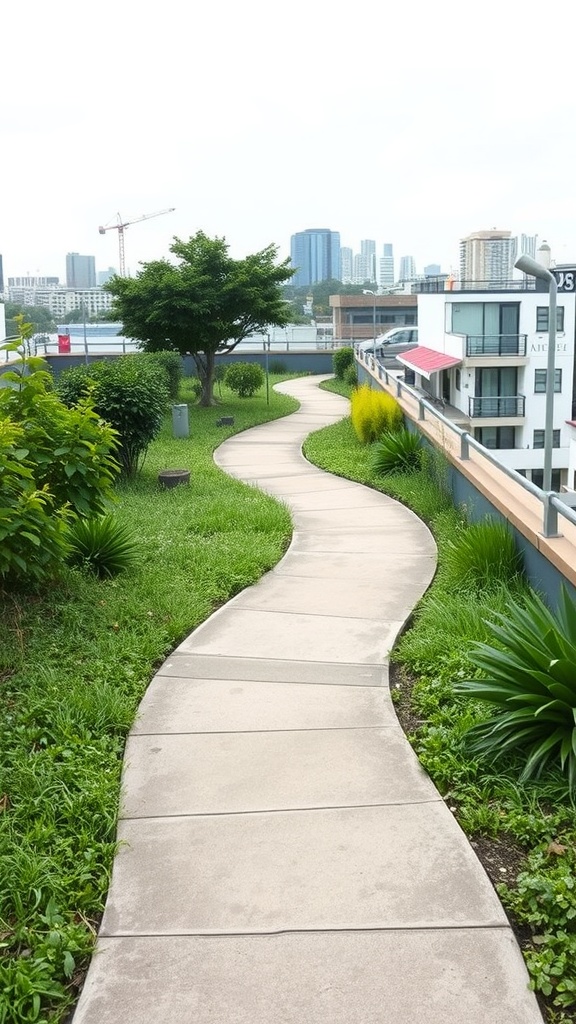
Pathways in a roof garden play a key role in how people experience the space. The winding path in the image creates a natural flow, inviting visitors to explore. It encourages a leisurely stroll, allowing time to appreciate the greenery and the view of the city skyline.
The choice of materials for the pathway can enhance the overall look. A smooth, durable surface like concrete is practical and blends well with the natural surroundings. The gentle curves of the path add a playful element, making the garden feel more inviting.
Incorporating plants along the edges softens the hardscape. Lush greenery adds life and color, creating a sense of tranquility. This balance between hard and soft elements is essential for a harmonious design.
Lighting along the pathway can extend the usability of the garden into the evening. Soft lights can highlight the curves and create a magical atmosphere. This makes the space not just a garden, but a place to unwind and enjoy the beauty of nature amidst the urban environment.
Wind Protection Strategies
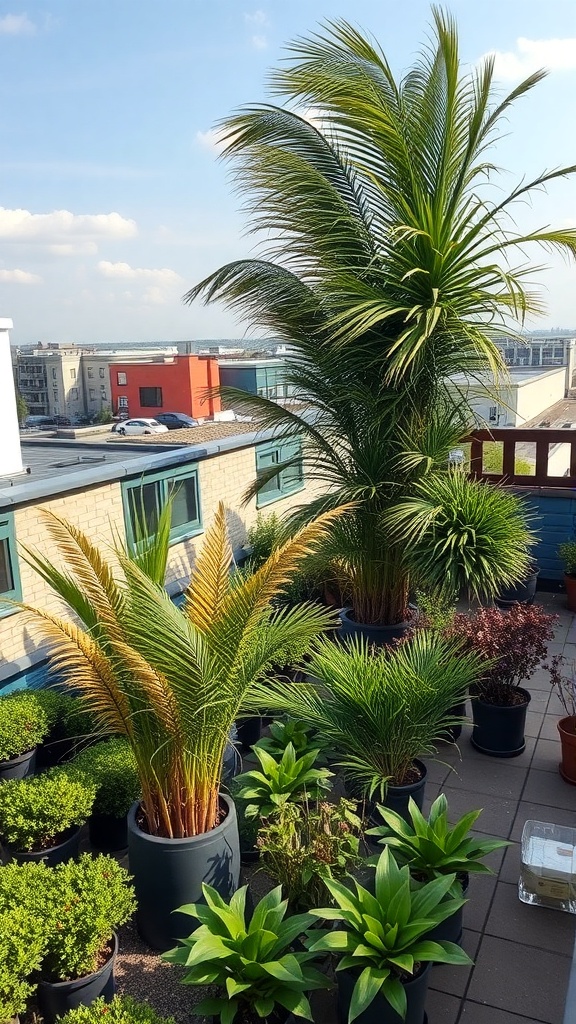
Creating a roof garden is a fantastic way to enjoy nature in an urban setting. However, wind can be a significant challenge for rooftop plants. The image shows a vibrant collection of potted plants, including tall palms and lush greenery, all thriving in a rooftop environment.
To protect these plants from strong winds, consider using taller plants as natural windbreaks. The palms in the image serve this purpose well, providing a shield for the smaller plants below. Grouping plants together can also create a microclimate, helping to reduce wind exposure.
Another effective strategy is to use barriers like trellises or decorative screens. These can be placed strategically to block gusts while adding visual interest to the garden. The layout in the image suggests a thoughtful arrangement that maximizes both beauty and protection.
Lastly, consider the orientation of your roof garden. Positioning it away from prevailing winds can make a big difference. With the right wind protection strategies, your rooftop oasis can flourish, providing a peaceful retreat above the city.
Seasonal Plant Selection for Year-Round Beauty
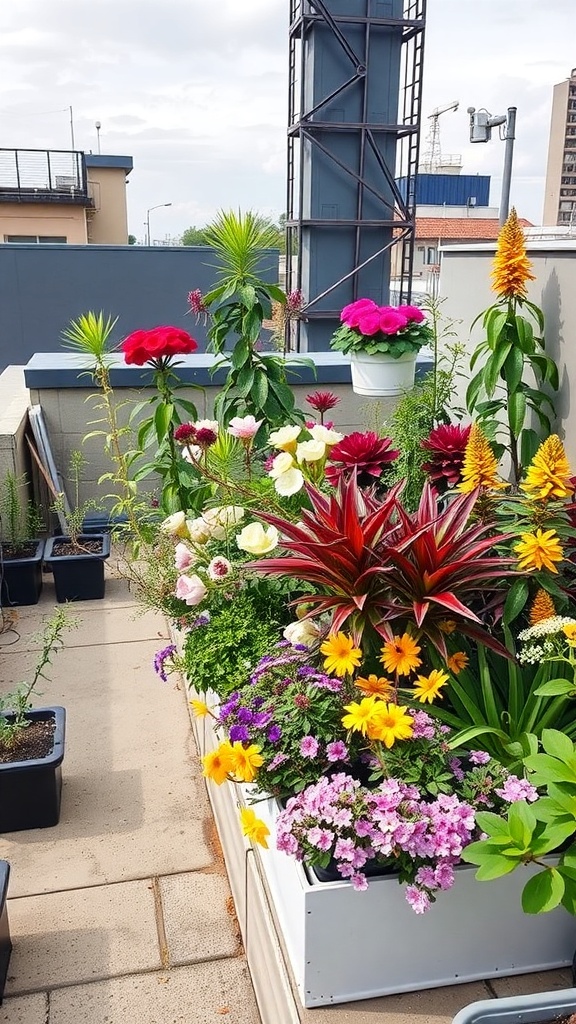
Creating a stunning roof garden is all about choosing the right plants for each season. The image shows a vibrant mix of flowers and greenery, perfect for adding color and life to any rooftop space. This selection not only beautifies the area but also provides a refreshing escape from the urban environment.
For spring, consider planting bright blooms like tulips and daffodils. These flowers bring a cheerful vibe as they emerge from winter. In summer, opt for sun-loving plants like petunias and marigolds, which thrive in warmer weather and add a splash of color.
As fall approaches, switch to hardy perennials like asters and chrysanthemums. These plants can withstand cooler temperatures while still providing lovely hues. Finally, in winter, evergreen plants like holly or winter jasmine can keep your garden looking lively, even in the cold months.
Mixing seasonal plants ensures that your roof garden remains visually appealing throughout the year. With careful planning, you can enjoy a beautiful and inviting space, no matter the season!
Designing for Wildlife Habitats
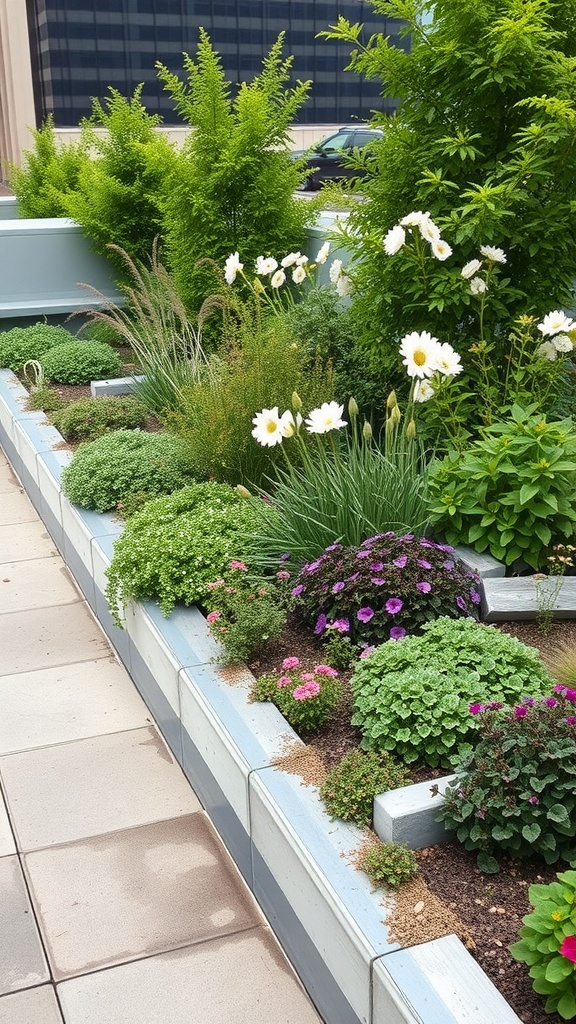
Creating a roof garden is not just about aesthetics; it’s also about supporting local wildlife. The image showcases a vibrant garden filled with various plants, which can attract different species. Flowers like daisies and colorful petunias not only add beauty but also serve as food sources for pollinators such as bees and butterflies.
Incorporating native plants is a smart choice. They are adapted to the local climate and soil, making them easier to care for. Native plants also provide essential habitats for birds and insects. The greenery in the image suggests a healthy ecosystem, offering shelter and food for various creatures.
Consider adding features like birdhouses or bee hotels to further enhance the habitat. These elements can encourage wildlife to visit and thrive in your roof garden. A diverse garden can create a small sanctuary in the city, benefiting both nature and urban dwellers.
Incorporating Shade Solutions
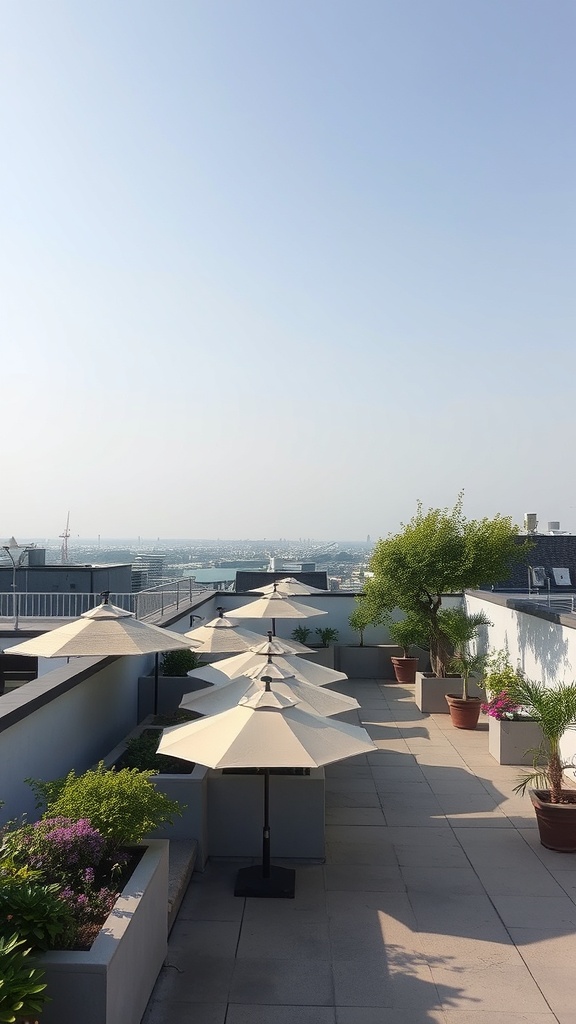
Creating a roof garden is a fantastic way to enjoy outdoor space in the city. One key aspect to think about is shade. The image shows a lovely rooftop area equipped with several umbrellas, providing much-needed shade. This setup allows for comfortable lounging and dining, even on sunny days.
Using umbrellas is a simple and effective way to add shade. They can be easily moved around to suit the sun’s position. This flexibility means you can enjoy your garden at any time of the day. Plus, they come in various styles and colors, allowing you to match them with your garden’s theme.
In addition to umbrellas, consider adding plants that can provide natural shade. Trees and tall shrubs can create a more inviting atmosphere while also cooling the area. The greenery in the image complements the umbrellas beautifully, enhancing the overall look of the space.
Don’t forget about the materials you use for your shade solutions. Choosing durable, weather-resistant options will ensure they last through different seasons. This way, your roof garden remains a cozy retreat for years to come.
Incorporating Art and Sculptures
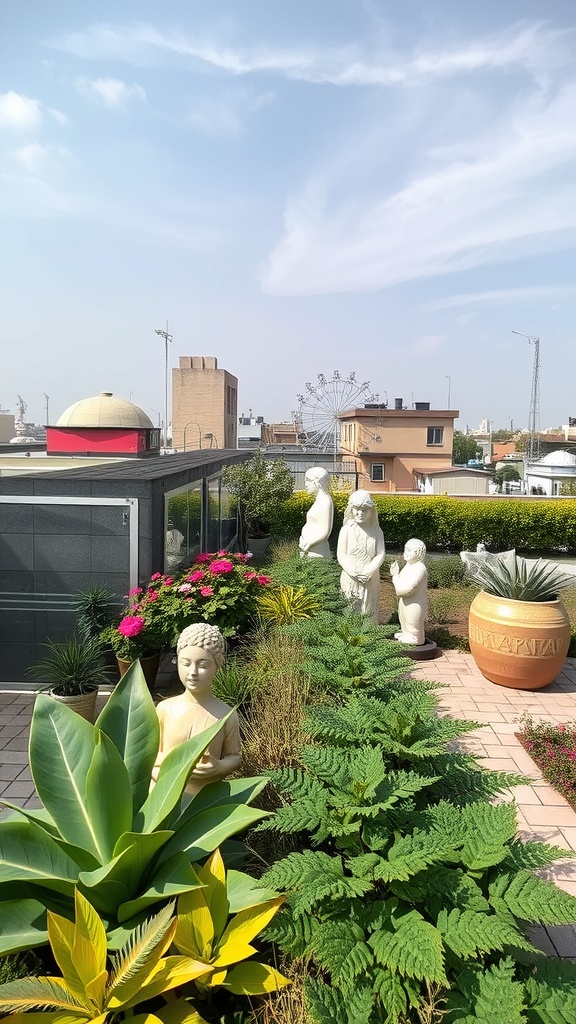
Adding art and sculptures to your roof garden can create a unique vibe. In the image, we see a blend of greenery and artistic elements that enhance the space. The statues, including a serene Buddha and playful figures, bring a sense of tranquility and joy.
These pieces serve as focal points, drawing the eye and sparking conversation. The vibrant flowers and lush plants complement the sculptures beautifully, creating a harmonious balance. This combination invites relaxation and reflection, making the garden a perfect escape from the hustle of city life.
When choosing art for your garden, think about the mood you want to create. Whether it’s whimsical or calming, the right pieces can transform your space. Consider materials that can withstand the elements, ensuring your art remains stunning year-round.
Establishing a Focal Point
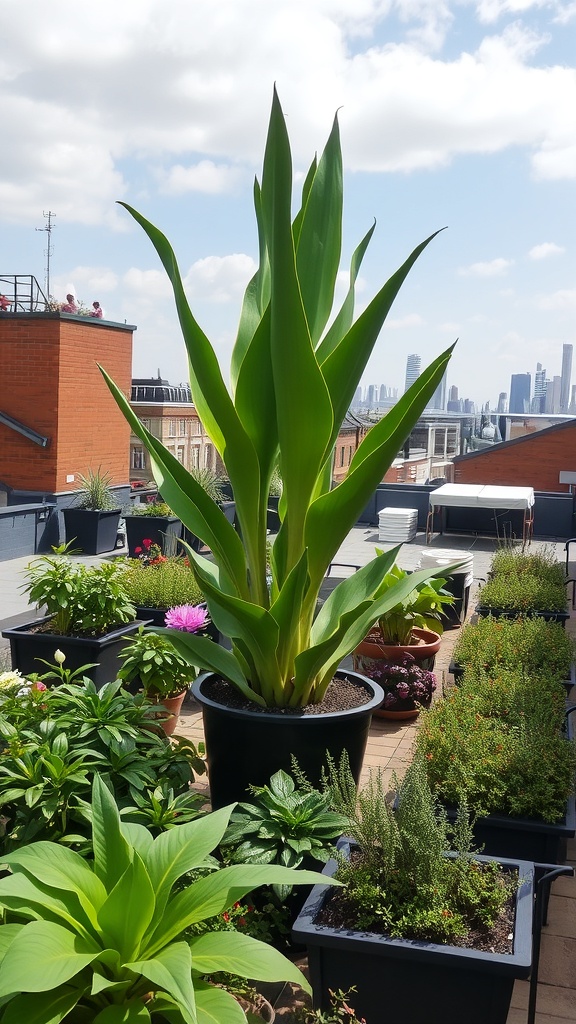
Creating a roof garden is all about making the space inviting and enjoyable. One way to achieve this is by establishing a focal point. In the image, a striking tall plant stands out among various smaller plants. This large green feature draws the eye and adds a sense of height to the garden.
When designing your roof garden, think about what you want to highlight. A bold plant like this can serve as a centerpiece, making the area feel more cohesive. Surrounding it with smaller plants creates layers, enhancing the visual interest.
Consider the colors and textures of your plants. The vibrant green leaves of the focal plant contrast beautifully with the other greenery. This contrast can make your garden feel lively and dynamic. You could also add decorative elements like sculptures or unique pots to further enhance the focal point.
Ultimately, the goal is to create a space that feels balanced and inviting. A well-placed focal point can transform your roof garden into a personal retreat.
Utilizing Containers for Flexibility
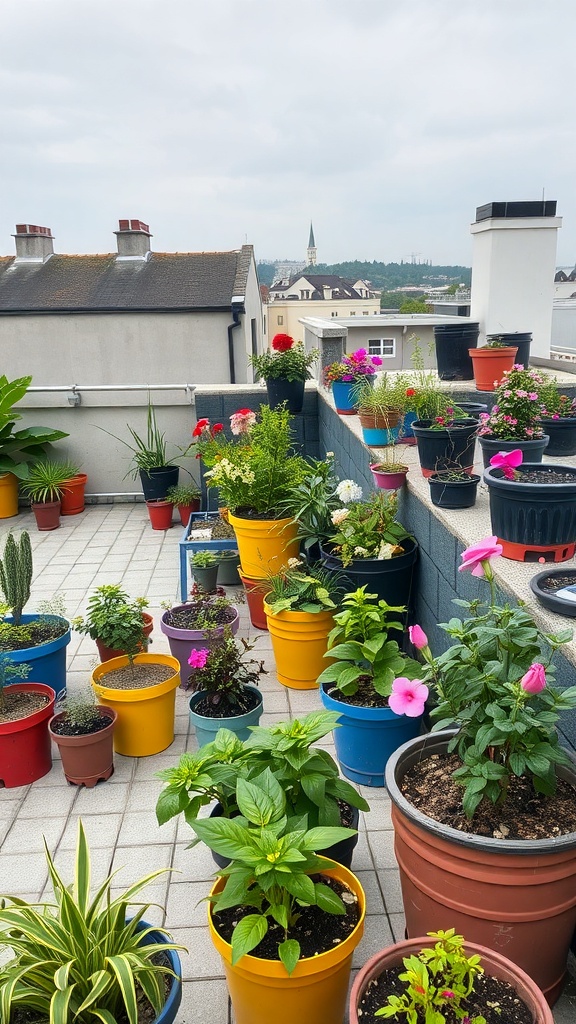
Containers are a fantastic way to create a vibrant roof garden. They allow you to grow a variety of plants without needing a lot of space. In the image, you can see a colorful array of pots filled with flowers and greenery. This setup not only adds beauty but also provides flexibility in design.
Using containers means you can easily rearrange your plants. If you want to change the look of your garden, just move a few pots around. This is perfect for experimenting with different layouts or adapting to seasonal changes. You can mix and match colors and sizes, creating a lively atmosphere on your rooftop.
Another advantage is that containers can be placed in areas that might not be suitable for traditional gardening. If a spot gets too much sun or shade, you can simply relocate the pots. This adaptability makes container gardening an excellent choice for urban spaces.
Don’t forget about the types of plants you choose! Opt for varieties that thrive in containers. Herbs, flowers, and even small vegetables can flourish in this setup. With a little creativity, your roof garden can become a personal retreat filled with life and color.
Using Color Theory in Plant Selection
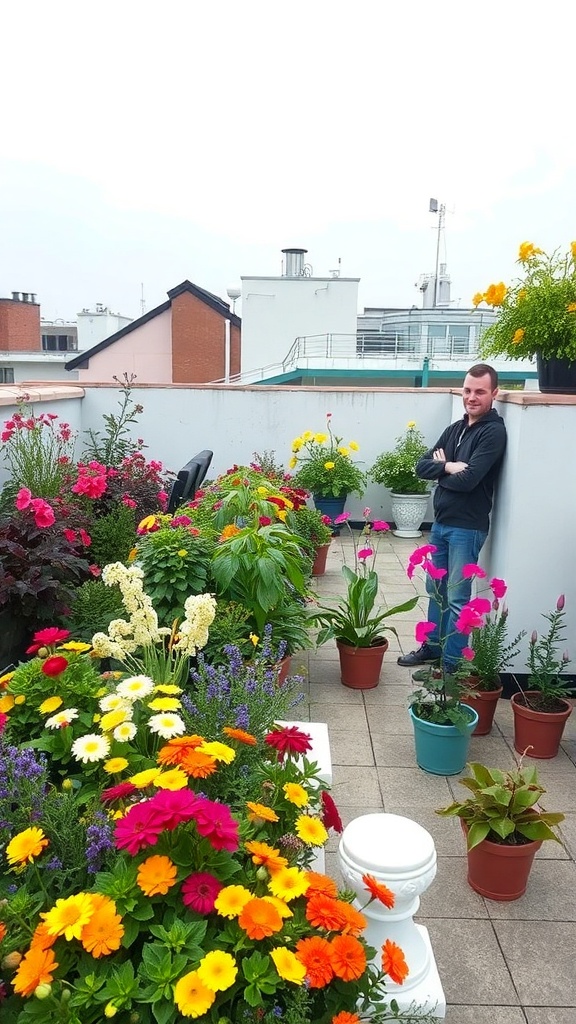
Color theory plays a big role in creating a stunning roof garden. The image shows a vibrant rooftop filled with various flowers and plants, showcasing a delightful mix of colors. This diversity not only enhances the visual appeal but also creates a lively atmosphere.
When selecting plants, think about how colors interact. Warm colors like reds, oranges, and yellows can energize a space, while cool colors like blues and purples offer a calming effect. In the image, the bright yellows and reds pop against the greenery, drawing the eye and creating a cheerful vibe.
Consider the seasons too. Some colors shine in spring, while others are more prominent in summer or fall. Mixing seasonal plants can keep your garden looking fresh year-round. The arrangement in the photo shows a thoughtful balance of colors, making it a great example of how to use color theory effectively.
Don’t forget about the textures and shapes of the plants. Combining different leaf shapes and sizes can add depth to your garden. The plants in the image vary in height and form, contributing to a dynamic look. This approach not only pleases the eye but also invites exploration.
Showcasing Seasonal Decorations

Seasonal decorations can turn a simple roof garden into a festive retreat. In the image, vibrant plants and cheerful ornaments create a warm atmosphere. The use of red bows and golden accents adds a touch of holiday spirit, making the space inviting.
Notice how the greenery is complemented by colorful flowers and decorative elements. This combination not only enhances the visual appeal but also brings joy to anyone who visits. The arrangement of plants in various heights creates depth and interest.
Lighting plays a key role too. Soft lights can highlight the decorations and make the garden feel cozy during the evening. Whether it’s for a holiday party or a quiet evening, these seasonal touches can make a roof garden feel special.
Balancing Hardscape and Softscape
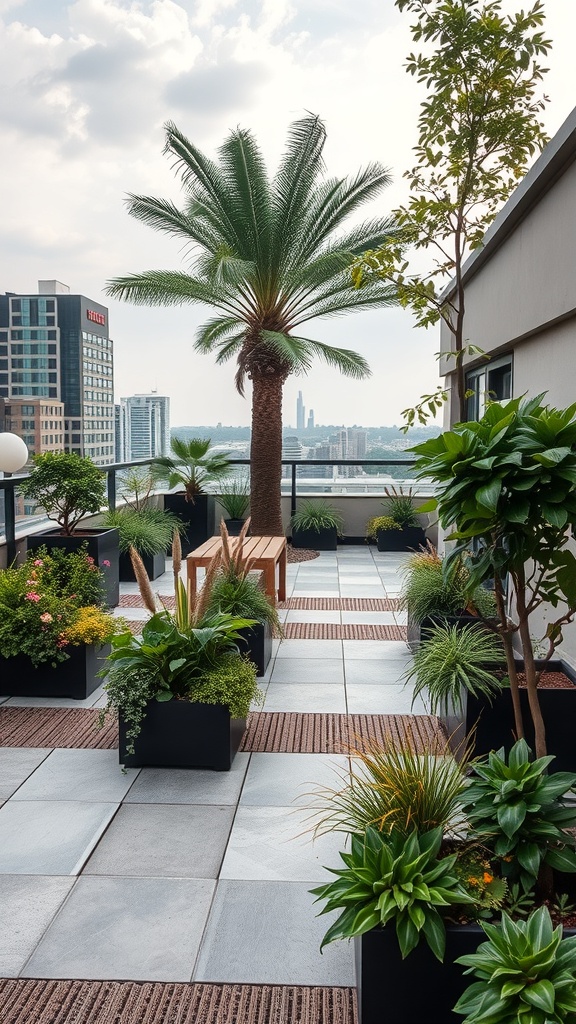
Creating a roof garden is all about finding the right mix of hardscape and softscape. In the image, you can see a beautiful blend of materials that work together to create a welcoming space. The sleek, gray tiles provide a sturdy foundation, while the planters filled with vibrant greenery add life and color.
The wooden bench invites relaxation, making it a perfect spot to enjoy the view. The palm tree stands tall, offering a tropical feel that contrasts nicely with the urban backdrop. This balance is key; hardscape elements like stone and wood provide structure, while softscape features like plants and flowers bring warmth and softness.
When designing your roof garden, think about how these elements interact. The hardscape can guide movement and define spaces, while the softscape can soften those edges and create a more inviting atmosphere. It’s all about creating harmony between the two.
Creating a Themed Garden Space
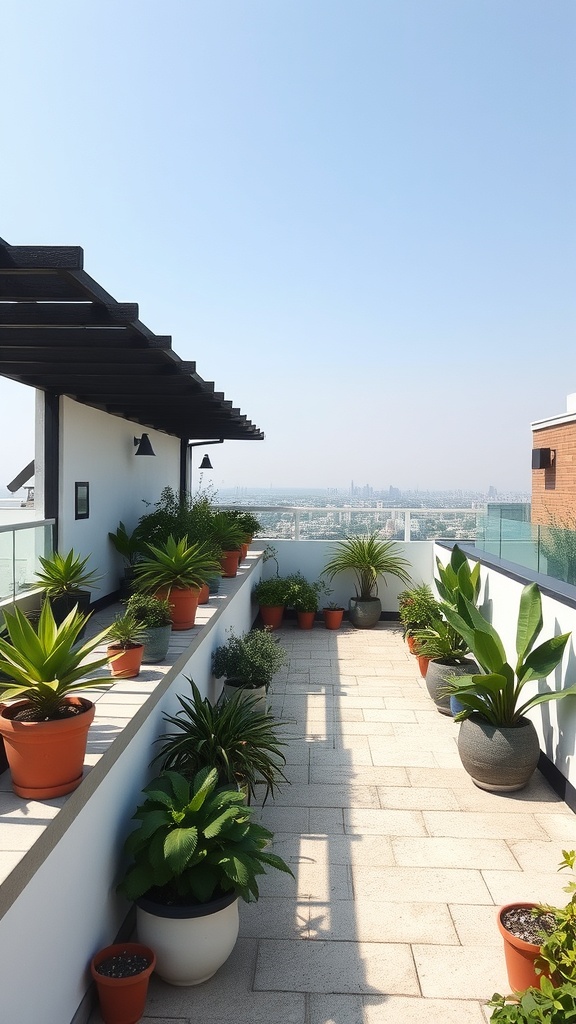
Creating a themed garden space on your roof can be a fun and rewarding project. The image shows a lovely rooftop garden filled with various plants in pots, providing a vibrant touch to the urban setting. The layout is simple yet effective, allowing for easy maintenance and a clean look.
When designing your themed garden, think about the overall vibe you want to create. Do you prefer a tropical feel with lush greenery, or maybe a more minimalist approach with succulents? The plants in the image suggest a mix of both, showcasing how different types can coexist beautifully.
Consider the arrangement of your plants. Grouping them by height and texture can create visual interest. The pots in the image vary in size and shape, which adds character to the space. You can also incorporate decorative elements like lanterns or garden art to enhance the theme.
Don’t forget about seating! A small table and chairs can turn your rooftop into a cozy retreat. The open sky and city views make it an ideal spot for relaxation or entertaining friends. With a little creativity, your rooftop can become a themed garden that reflects your personality and style.
Creating a Lush Urban Oasis
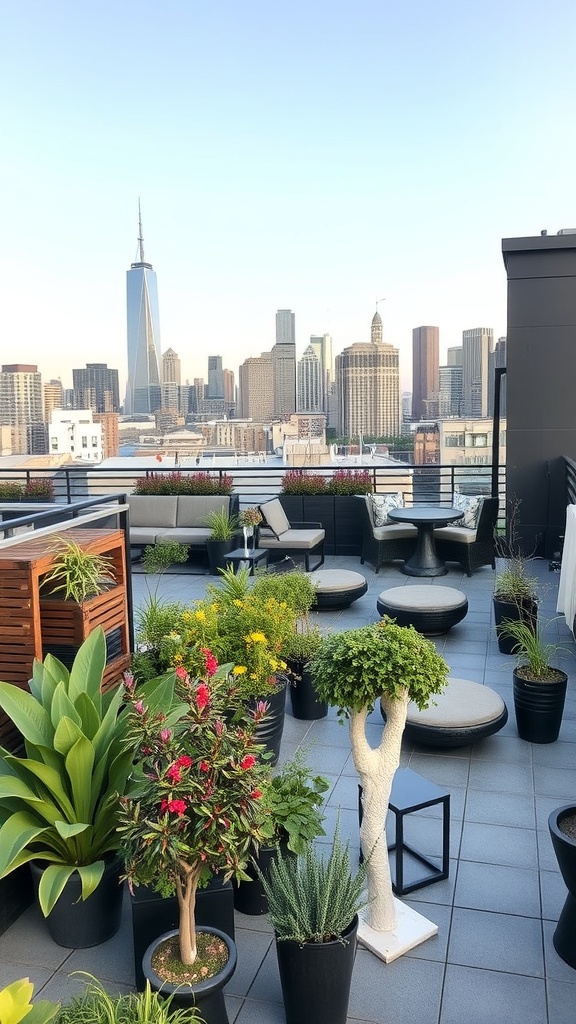
Imagine stepping onto a rooftop garden that feels like a hidden paradise in the city. This space is filled with vibrant plants and cozy seating, perfect for relaxation or socializing. The view of the skyline adds a stunning backdrop, making it a special retreat.
In this garden, various plants thrive in pots, showcasing different colors and textures. From flowering shrubs to leafy greens, each plant contributes to a lively atmosphere. The arrangement is thoughtful, creating a balance between nature and comfort.
Seating areas invite you to sit back and enjoy the surroundings. Whether it’s morning coffee or evening gatherings, this rooftop is designed for enjoyment. The combination of greenery and urban views transforms an ordinary space into a delightful escape.
Utilizing Smart Irrigation Systems
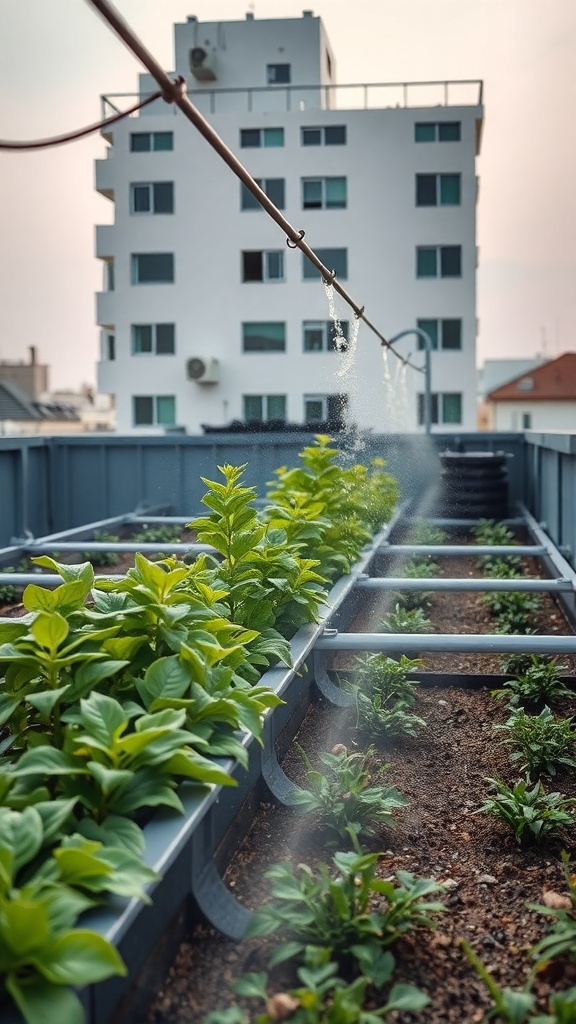
In the image, we see a rooftop garden featuring lush green plants, all being watered by a smart irrigation system. This setup not only looks great but also highlights the importance of efficient watering techniques in urban gardening.
Smart irrigation systems are designed to optimize water usage. They can automatically adjust the amount of water based on weather conditions, soil moisture levels, and the specific needs of the plants. This means your plants get just the right amount of water, reducing waste and ensuring healthy growth.
In a rooftop garden, where space is limited, every drop counts. The system shown in the image uses a network of pipes and sprinklers to deliver water precisely where it’s needed. This not only saves water but also keeps the plants thriving, even in hot weather.
By incorporating smart irrigation, you can spend less time worrying about watering and more time enjoying your garden. It’s a simple way to make your gardening experience more enjoyable and sustainable.
Incorporating Seating with a View
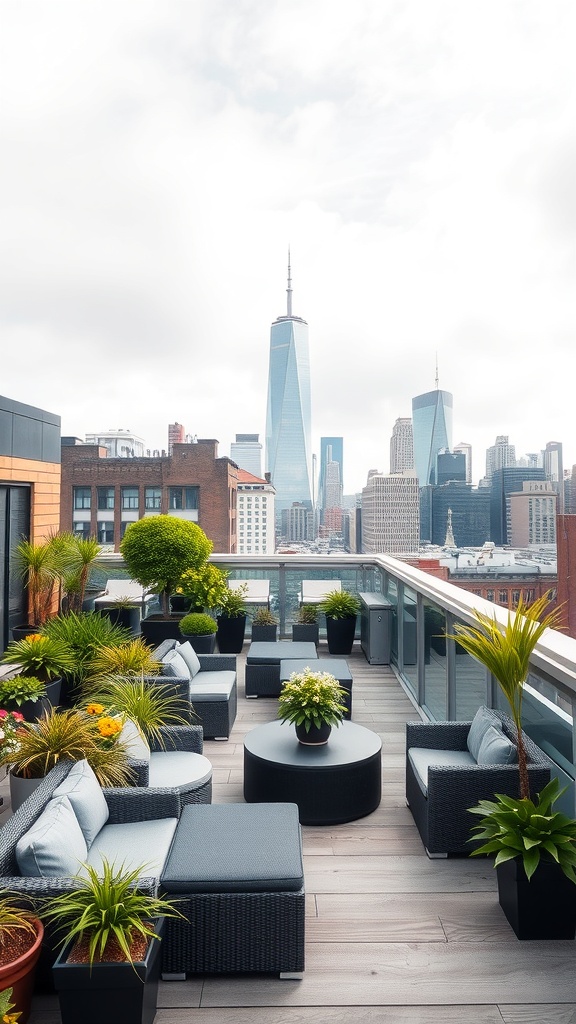
Creating a roof garden is a fantastic way to enjoy the outdoors while surrounded by the beauty of your city. One key element to consider is the seating arrangement. Comfortable seating can transform your rooftop into a cozy retreat.
In the image, you can see a stylish setup with plush sofas and a round table, perfect for gatherings or quiet moments. The seating is strategically placed to offer a stunning view of the skyline, making it an ideal spot for relaxation.
Adding greenery, like the potted plants shown, enhances the space. They not only add color but also create a more inviting atmosphere. Choosing low-maintenance plants can keep your garden looking fresh without too much effort.
Think about how you want to use the space. Whether it’s for entertaining friends or enjoying a morning coffee, the right seating can make all the difference. Aim for a layout that encourages conversation and connection with the view.