
Tropical garden design brings a burst of color and life to any outdoor space, capturing the essence of exotic locales. By combining lush foliage, vibrant flowers, and unique textures, you can create a stunning retreat that feels like a mini paradise. From selecting the right plants to arranging them for maximum impact, this style is all about maximizing that tropical vibe while having fun with creativity.
Creating a Relaxation Zone

Imagine a cozy hammock swaying gently between palm trees, surrounded by vibrant flowers. This scene captures the essence of a tropical garden designed for relaxation. The soft colors of the flowers contrast beautifully with the lush green leaves, creating a peaceful atmosphere.
The hammock invites you to take a break. It’s the perfect spot to unwind with a book or simply enjoy the sounds of nature. The gentle rustle of the leaves and the distant chirping of birds add to the tranquility.
To create your own relaxation zone, think about incorporating similar elements. Choose comfortable seating, like a hammock or lounge chair, and surround it with colorful plants. Adding soft cushions can enhance comfort and style.
Lighting is also key. Consider string lights or lanterns to create a warm glow as the sun sets. This will make your space inviting both day and night. With a little planning, you can turn your garden into a serene escape.
Implementing Color Schemes
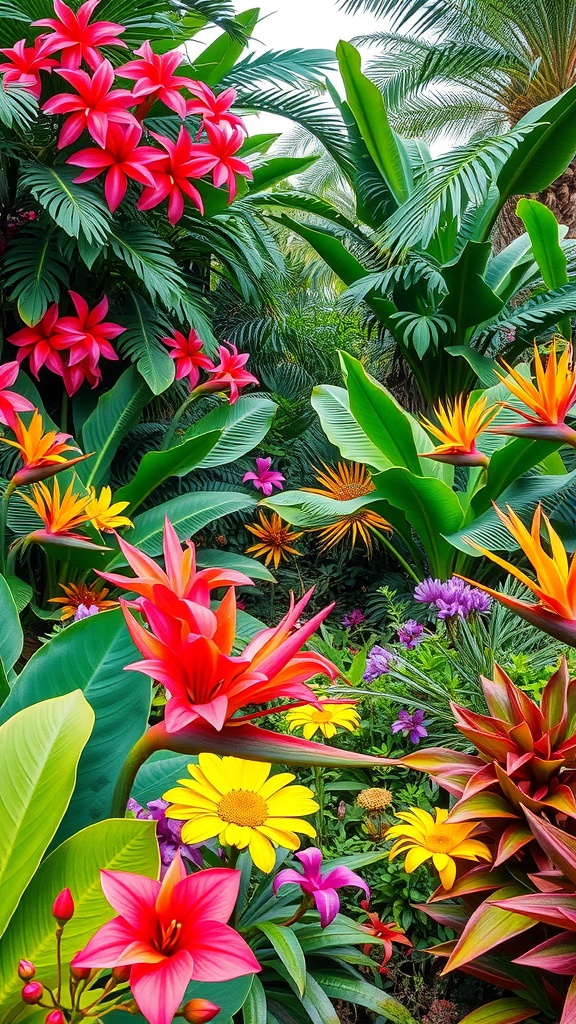
Creating a tropical garden is all about color. The image showcases a stunning array of vibrant flowers and lush greenery. Bright pinks, yellows, and oranges pop against the deep greens of the leaves. This combination creates a lively and inviting atmosphere.
When planning your garden, think about how colors interact. For instance, the bold reds and yellows in the image draw the eye and create a sense of warmth. Pairing these with cooler greens can balance the overall look. You can also mix different flower types to add texture and depth.
Don’t shy away from experimenting! Use contrasting colors to make certain plants stand out. The tropical garden in the image illustrates how a mix of colors can create a dynamic space. Consider seasonal blooms to keep your garden colorful year-round.
Lastly, lighting plays a role too. Natural sunlight can enhance the colors of your plants, making them appear even more vibrant. So, when designing your tropical garden, keep these tips in mind for a stunning visual experience.
Choosing the Right Tropical Plants
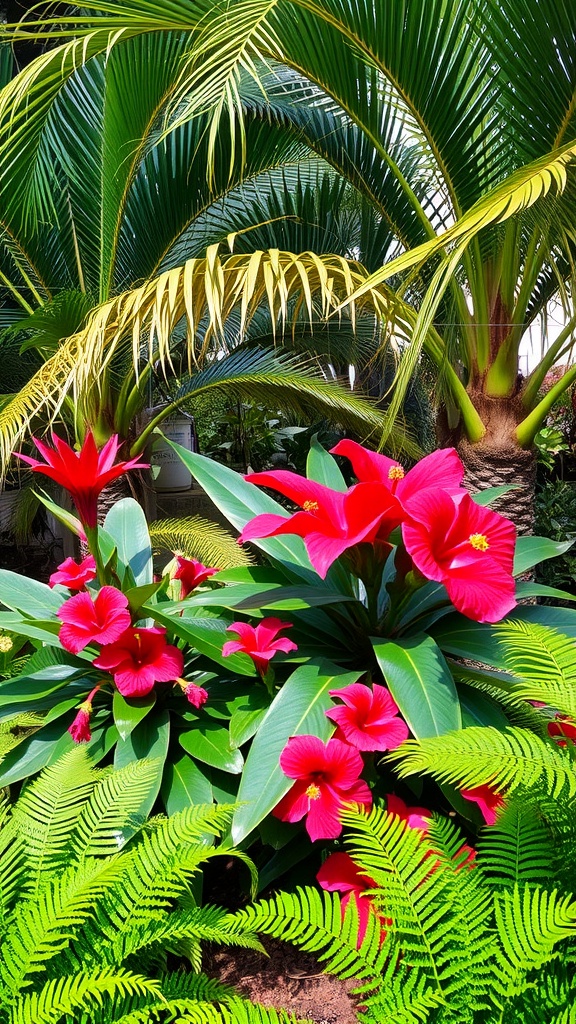
Creating a tropical garden is all about selecting the right plants that bring life and color to your space. The image showcases a stunning arrangement of vibrant flowers and lush greenery, perfectly illustrating the beauty of tropical flora. The bold red blooms stand out against the rich green leaves, creating a lively and inviting atmosphere.
When choosing tropical plants, think about the colors and textures you want to include. The image features large, glossy leaves that add depth and contrast to the bright flowers. Consider plants like hibiscus, which are known for their striking colors and ability to thrive in warm climates. Pairing these with ferns can create a beautiful layered effect, as seen in the image.
Don’t forget about the overall layout. The way plants are arranged can enhance the visual appeal of your garden. The combination of tall palm fronds and shorter flowering plants creates a dynamic look. Aim for a mix of heights and shapes to keep things interesting.
Lastly, think about the care each plant requires. Some tropical plants need more sunlight, while others thrive in shade. Make sure to choose plants that fit your garden’s specific conditions. With the right selection, your tropical garden can become a vibrant retreat that brings joy and relaxation.
Incorporating Water Features
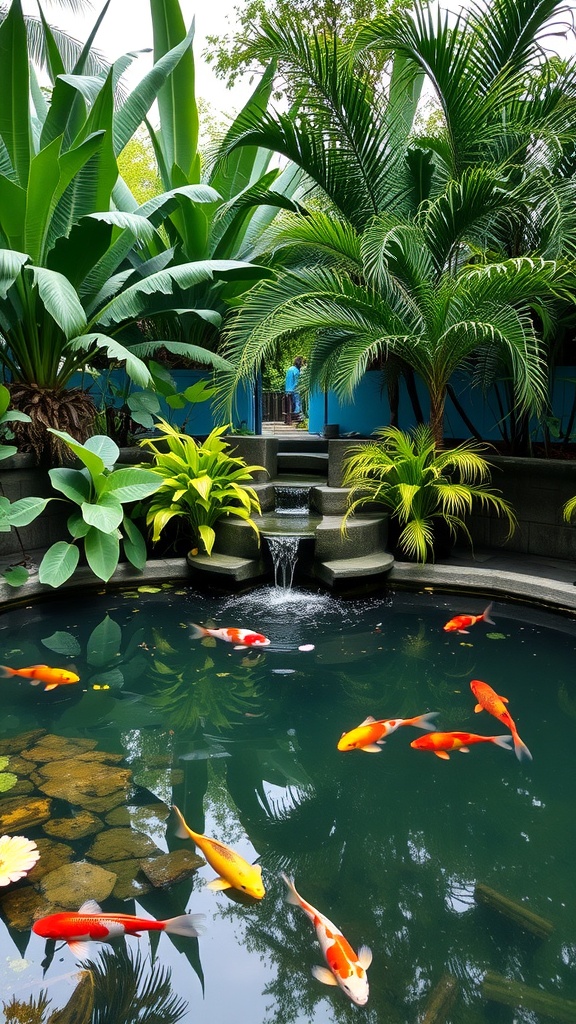
Water features can truly transform a tropical garden into a serene retreat. In the image, we see a beautiful pond surrounded by lush greenery. The vibrant plants create a stunning backdrop, making the water a focal point.
The pond is home to colorful koi fish, adding life and movement to the scene. These fish not only enhance the visual appeal but also contribute to the ecosystem of the garden. The gentle sound of the waterfall creates a calming atmosphere, inviting you to relax and enjoy the surroundings.
When designing your tropical garden, think about how water features can enhance your space. A small pond or fountain can attract wildlife and provide a refreshing spot to unwind. The combination of water and plants creates a harmonious environment that feels both inviting and peaceful.
Lighting for Tropical Ambiance
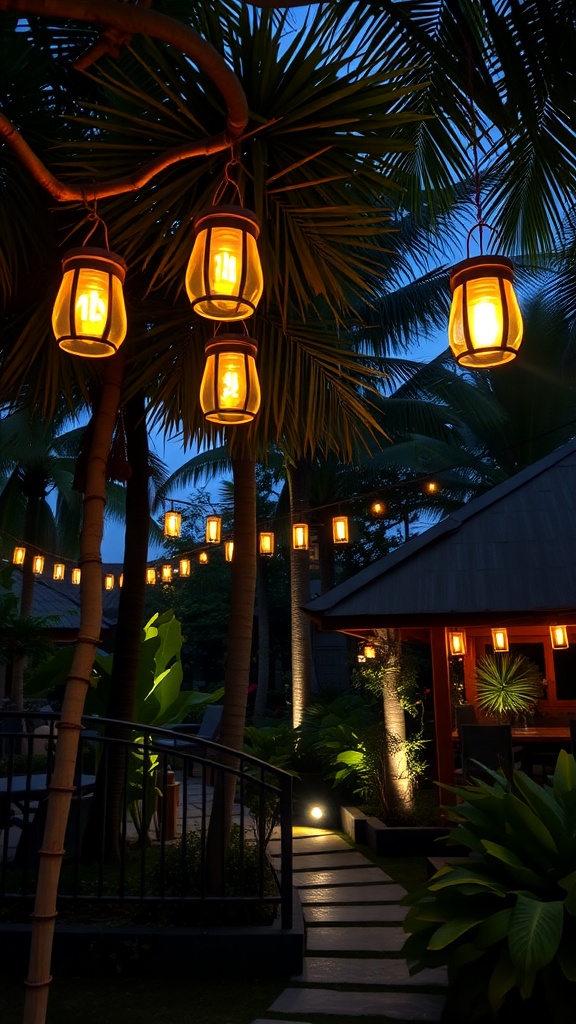
Creating a tropical garden is not just about the plants; lighting plays a huge role in setting the mood. The image shows a beautiful scene with lanterns hanging from trees, casting a warm glow. This kind of lighting can transform your garden into a magical space at night.
Using lanterns like these adds charm and warmth. They can be hung from branches or placed along pathways, guiding guests through your garden. The soft light creates a cozy atmosphere, perfect for relaxing evenings or gatherings with friends.
Incorporating string lights can also enhance the tropical feel. They can drape between trees or around seating areas, adding a festive touch. This combination of lanterns and string lights provides both function and beauty, making your garden inviting after the sun goes down.
Consider using solar-powered lights for an eco-friendly option. They charge during the day and light up at night, making them a practical choice. With the right lighting, your tropical garden can shine, creating a space that feels alive and welcoming.
Designing Pathways with Natural Materials
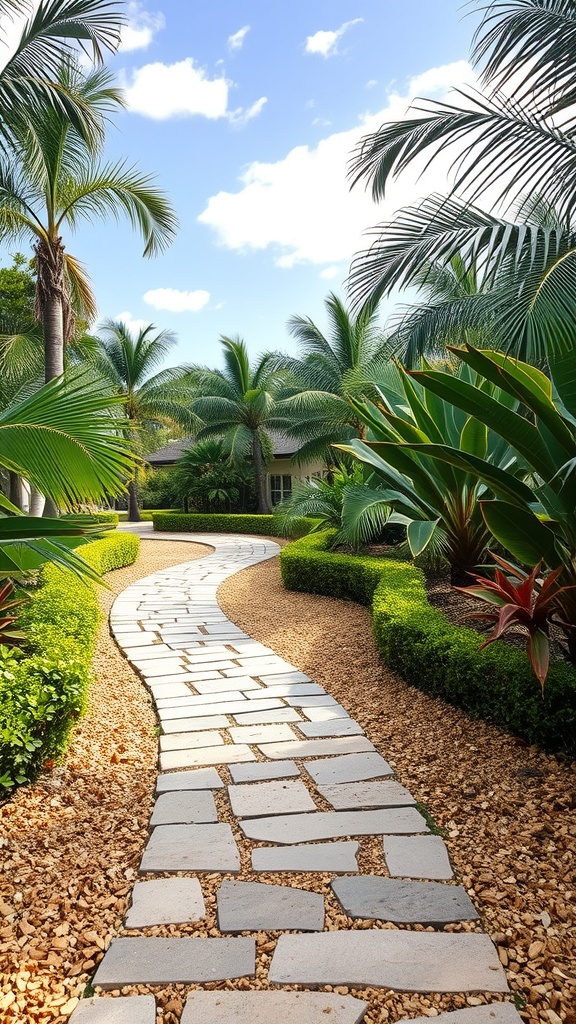
Creating pathways in a tropical garden can be a delightful task. The image shows a winding path made of stone, surrounded by lush greenery. This design invites you to explore the garden while blending seamlessly with nature.
Using natural materials like stone and gravel not only enhances the beauty of the garden but also provides a rustic charm. The smooth stones create a sturdy surface for walking, while the surrounding plants add a vibrant touch.
Consider incorporating different textures and colors in your pathway. The contrast between the light stone and the dark green foliage creates a stunning visual effect. This approach helps in guiding visitors through the garden, making each turn an exciting discovery.
Don’t forget to think about maintenance. Natural materials can be easier to care for than synthetic options. With a little effort, your pathways can remain inviting and beautiful for years to come.
Adding Outdoor Seating Areas
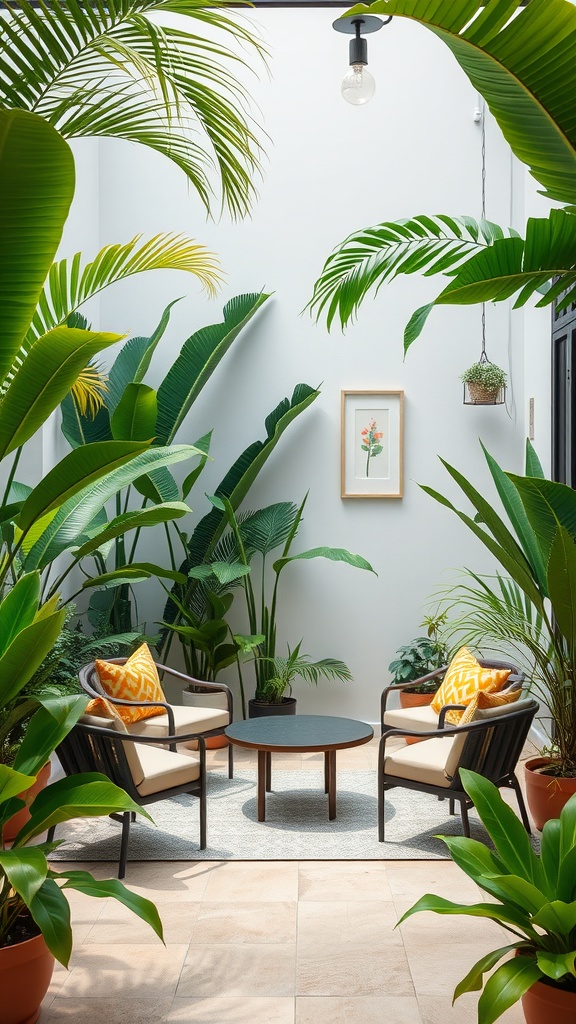
Creating a cozy outdoor seating area can transform your tropical garden into a relaxing retreat. Picture a space surrounded by lush greenery, where you can unwind with a book or enjoy a cup of coffee. In the image, we see a charming setup with comfortable chairs and a sleek table, perfect for casual gatherings.
The vibrant plants frame the seating area beautifully, adding a splash of color and life. The use of soft cushions enhances comfort, inviting you to sit back and enjoy the surroundings. Lighting plays a key role too; the hanging bulb adds a warm touch, making the space inviting even in the evening.
Choosing the right furniture is essential. Opt for materials that withstand the elements while complementing the tropical theme. A round table encourages conversation, making it ideal for small get-togethers. Don’t forget to incorporate elements like rugs or decorative items to personalize the space.
Ultimately, your outdoor seating area should reflect your style while offering a peaceful escape. Whether it’s for entertaining friends or enjoying quiet moments, this space can become a favorite spot in your garden.
Incorporating Edible Plants
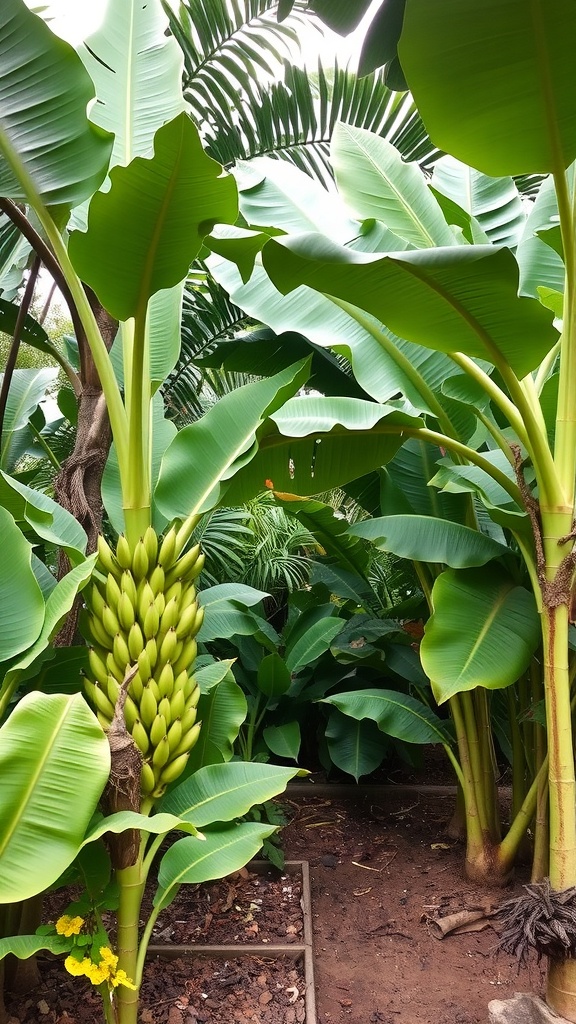
Creating a tropical garden is a fun way to bring a bit of paradise to your home. One of the best parts is adding edible plants that not only look great but also provide delicious treats. In the image, you can see a bunch of green bananas growing among large, lush leaves. This is a perfect example of how edible plants can enhance the beauty of your garden.
Bananas are a fantastic choice for tropical gardens. They thrive in warm climates and add a tropical flair with their broad leaves and striking fruit. Plus, they are relatively easy to grow. Just make sure they get plenty of sunlight and water, and you’ll be rewarded with a bountiful harvest.
Incorporating other edible plants, like pineapples or herbs, can create a vibrant and functional space. Imagine walking through your garden and picking fresh basil for your pasta or enjoying a ripe pineapple straight from the plant. It’s a great way to enjoy nature and healthy eating at the same time.
Utilizing Vertical Space with Trellises
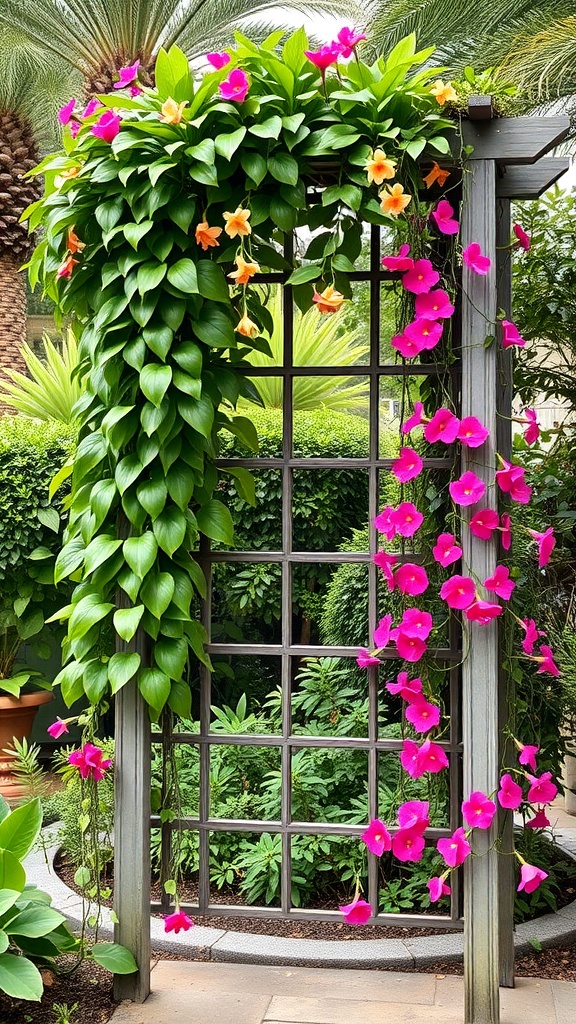
Vertical space is a fantastic way to enhance any tropical garden. A trellis can serve as a stunning focal point, drawing the eye upward. In the image, we see a beautifully designed trellis adorned with vibrant flowers. The mix of pink and orange blooms creates a lively atmosphere, perfect for a tropical setting.
Using a trellis allows you to maximize your garden’s potential. Climbing plants can flourish, adding layers and depth to your garden design. The lush greenery cascading down the trellis not only looks great but also provides a sense of privacy and enclosure.
Incorporating a trellis can also help with plant health. By allowing vines to climb, you can improve air circulation and sunlight exposure. This can lead to healthier plants and a more vibrant garden. Plus, it adds a touch of elegance to any outdoor space.
Whether you’re looking to create a cozy nook or simply want to showcase your favorite plants, a trellis is a great addition. It’s an easy way to bring life and color to your garden while utilizing vertical space effectively.
Designing with Texture Variations
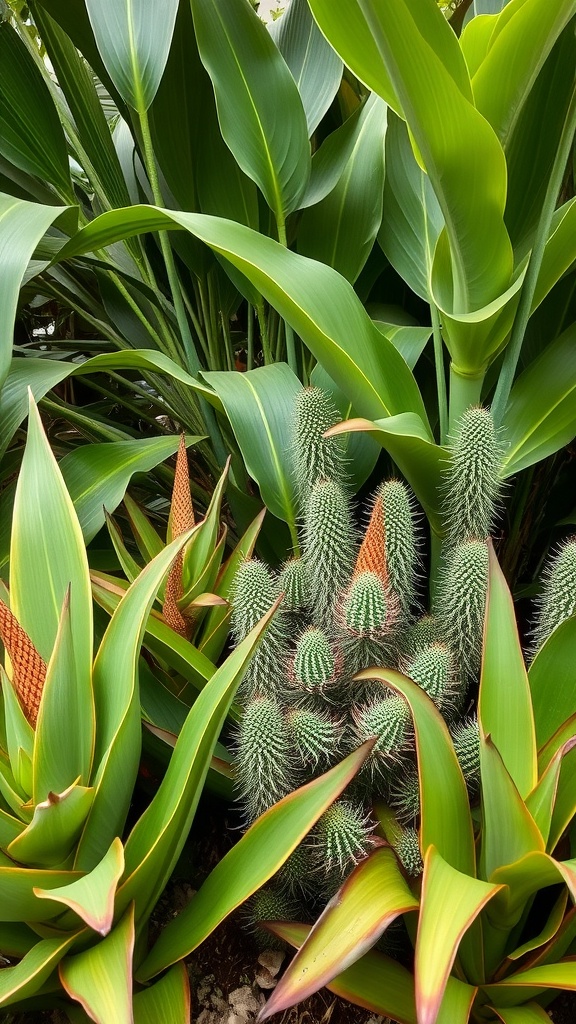
When creating a tropical garden, texture plays a big role in making the space lively. The image showcases a mix of lush green leaves and unique cacti, highlighting how different textures can complement each other. The broad, smooth leaves contrast beautifully with the spiky, textured surface of the cactus, creating visual interest.
Using a variety of plants helps to create depth in your garden. The vibrant, elongated leaves add a sense of movement, while the rounded shapes of the cacti provide a playful touch. This combination can make any garden feel more dynamic and inviting.
Incorporating different textures not only enhances the look but also adds to the overall experience of the garden. Walking through a space filled with diverse plant forms can be refreshing and enjoyable. So, when planning your tropical garden, think about mixing smooth, broad leaves with spiky or fuzzy plants for a delightful contrast.
Incorporating Garden Art
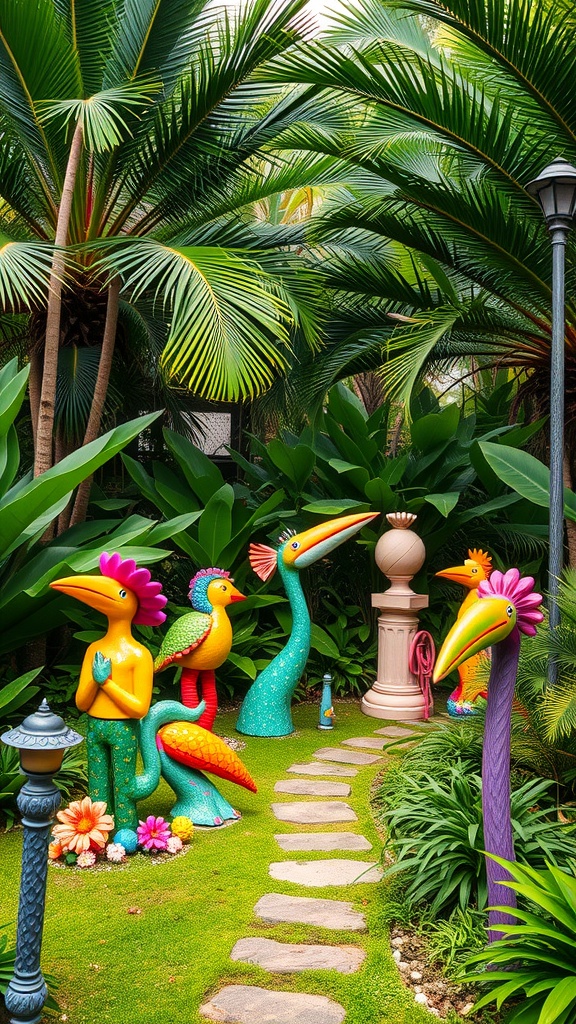
Garden art can bring a tropical garden to life. The vibrant colors and playful designs create a joyful atmosphere. In the image, you can see a collection of colorful bird sculptures that add a whimsical touch to the greenery.
These artistic pieces not only catch the eye but also invite conversation. They stand out against the lush backdrop of palm leaves and other tropical plants. The mix of colors—from bright yellows to deep blues—creates a cheerful vibe that enhances the overall garden experience.
Pathways lined with stepping stones lead visitors through this artistic display. This design encourages exploration and interaction with the art. Each sculpture seems to have its own personality, making the garden feel alive and welcoming.
Incorporating such art pieces can transform a simple garden into a unique retreat. Whether you choose bold sculptures or subtle accents, garden art can reflect your personal style and make your outdoor space truly special.
Creating Microclimates
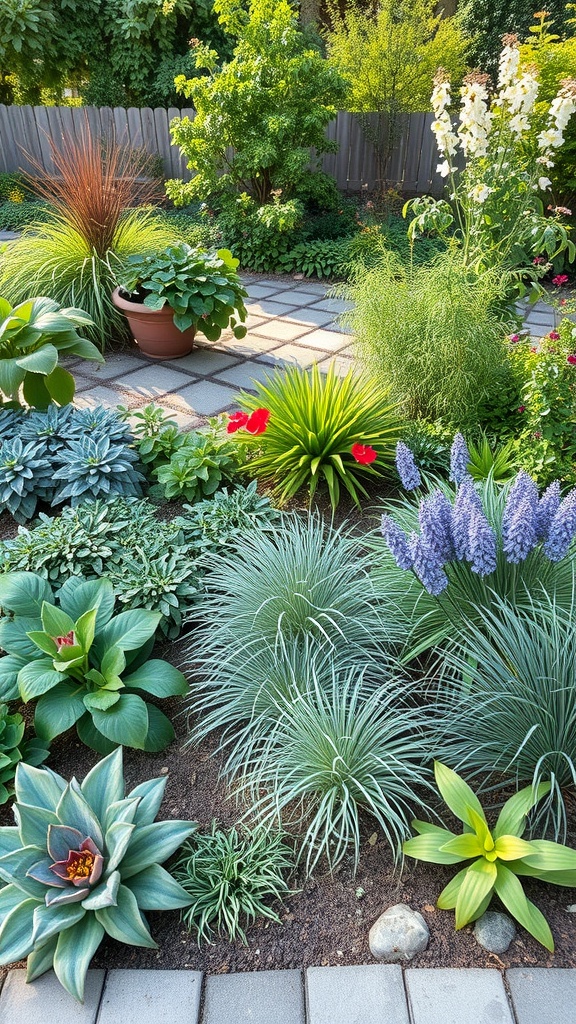
Microclimates can make your tropical garden thrive. They are small areas with different climate conditions compared to the surrounding environment. In the image, you can see a vibrant garden with various plants that thrive in their specific microclimates.
Notice how the arrangement of plants creates different zones. Some areas are shaded by taller plants, while others receive full sun. This diversity helps maintain moisture and temperature, benefiting all the plants.
Using pots can also help create microclimates. The potted plant in the image adds height and visual interest, while also allowing for easier control of soil and water. This can be especially useful for tropical plants that need specific care.
Grouping plants with similar needs together is key. For instance, the lush green foliage and colorful flowers in the image suggest that these plants enjoy similar light and water conditions. This not only helps them thrive but also makes the garden look cohesive and inviting.
Seasonal Planting Considerations
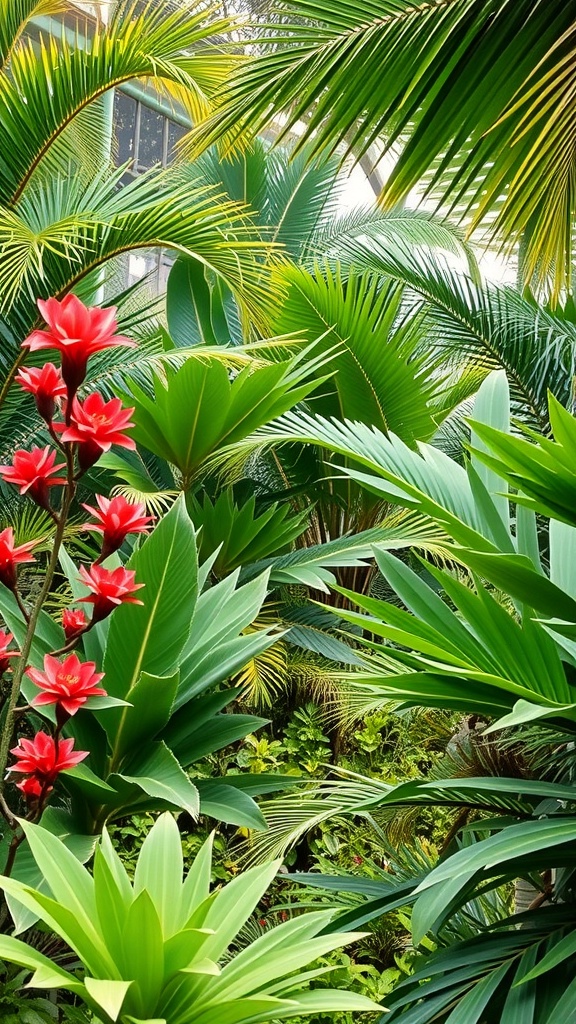
Creating a tropical garden is all about choosing the right plants for each season. The lush greenery and vibrant flowers in the image show how diverse and beautiful a tropical garden can be. When planning your garden, think about how different plants thrive at various times of the year.
In spring, you might want to focus on planting colorful flowers that bloom quickly, like the striking red blooms seen here. These can add a pop of color and attract pollinators. Summer is perfect for leafy plants that provide shade and a tropical feel. The various shades of green in the image highlight how foliage can create a lush environment.
As the seasons change, consider how your garden will look in the fall and winter. Some tropical plants can survive cooler temperatures, while others may need to be brought indoors. Planning ahead ensures your garden remains vibrant year-round.
Using Mulch for Moisture Retention
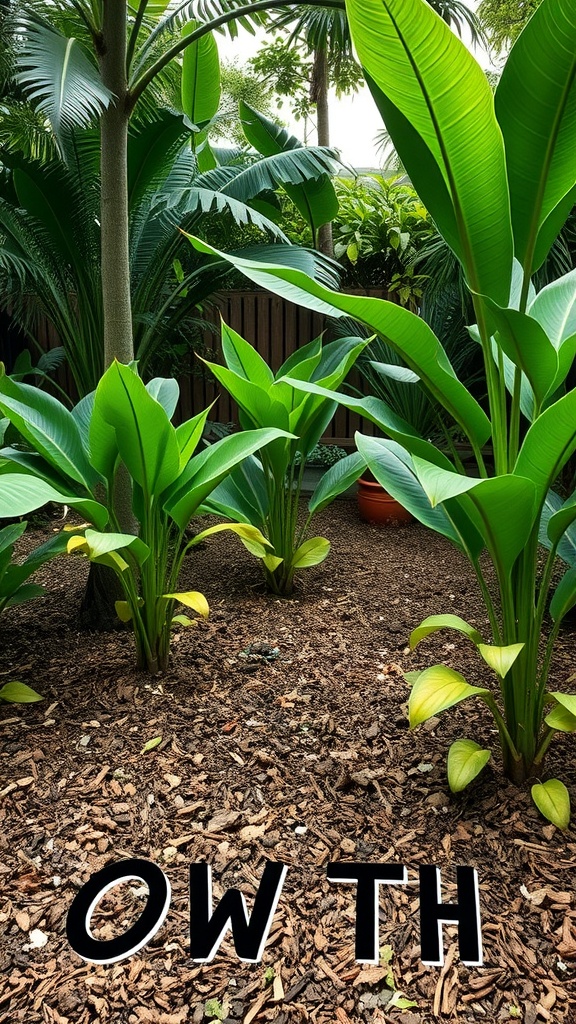
In a tropical garden, keeping plants healthy and vibrant is key. One effective way to achieve this is by using mulch. The image shows a lush garden filled with large green leaves and a rich layer of mulch on the ground. This setup not only looks beautiful but also serves a practical purpose.
Mulch helps retain moisture in the soil. In tropical climates, where heat can be intense, this is especially important. The mulch acts as a barrier, reducing evaporation and keeping the soil consistently moist. This means your plants can thrive without needing constant watering.
Another benefit of mulch is that it suppresses weeds. Weeds can compete with your plants for nutrients and water. By covering the soil with mulch, you create a less favorable environment for weeds to grow. This allows your tropical plants to focus on their growth without unnecessary competition.
In the image, the vibrant green leaves of the plants stand out against the dark mulch. This contrast not only enhances the garden’s beauty but also shows how well the plants can grow with the right care. Using mulch is a simple yet effective way to support your tropical garden.
Incorporating Native Species
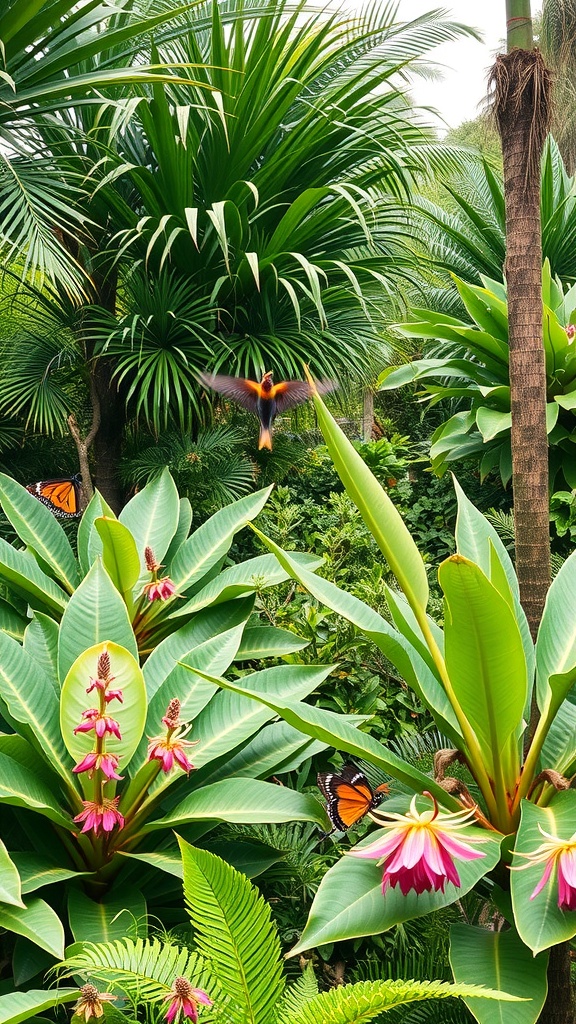
Creating a tropical garden is a delightful way to bring a slice of paradise to your home. One of the best ways to achieve this is by incorporating native species into your design. Native plants are well adapted to the local climate and soil, making them easier to care for and more resilient.
The image showcases a lush tropical garden filled with vibrant greenery and colorful flowers. You can see large leaves and striking blooms, which are characteristic of many native tropical plants. These plants not only enhance the beauty of your garden but also support local wildlife, like butterflies and birds.
Using native species can help create a balanced ecosystem in your garden. For instance, the plants in the image attract butterflies, which play a crucial role in pollination. By choosing plants that are native to your area, you can create a thriving habitat that benefits both the flora and fauna.
Moreover, native plants often require less water and fewer chemicals, making them a sustainable choice for your tropical garden. They can thrive in the local conditions without needing extra care. This means more time to enjoy your garden and less time worrying about maintenance!
Designing for Privacy
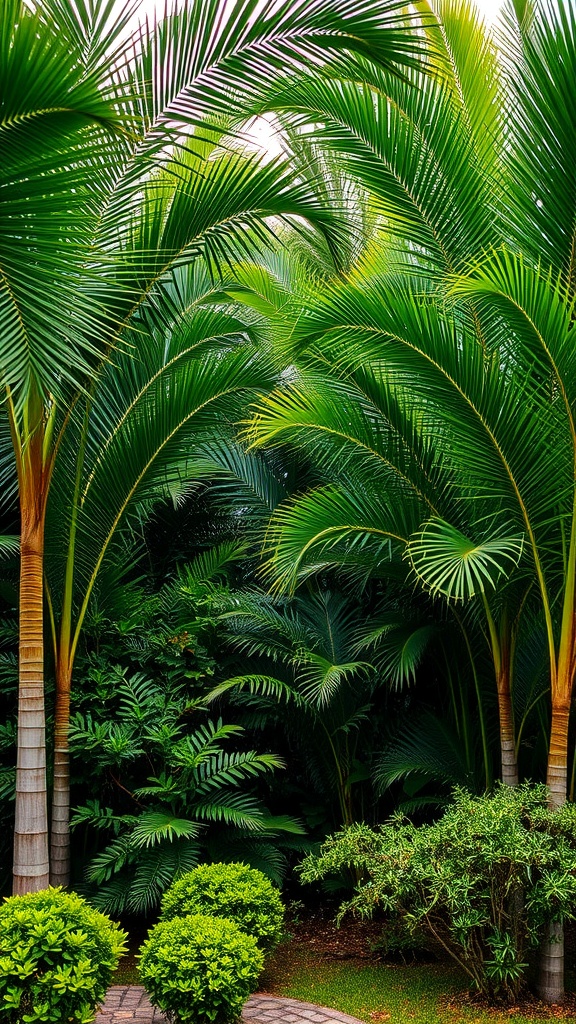
Creating a tropical garden is not just about vibrant plants and flowers; it’s also about crafting a private retreat. The image shows a lush arrangement of palm trees and dense greenery, perfect for establishing a secluded space.
Using tall plants like palms can act as natural barriers. They provide height and density, blocking out views from neighbors or passersby. The rich green foliage creates a sense of intimacy, making the garden feel like a personal oasis.
Incorporating various layers of plants adds depth and enhances privacy. Shrubs and smaller plants can fill in gaps, creating a lush backdrop. This not only looks beautiful but also helps to muffle sounds from outside.
Consider the layout of your garden. Positioning seating areas or features behind taller plants can provide a cozy nook. This way, you can enjoy your tropical paradise without feeling exposed.
Overall, designing for privacy in a tropical garden involves thoughtful plant selection and strategic placement. With the right choices, you can create a serene escape that feels both inviting and secure.
Creating a Focal Point
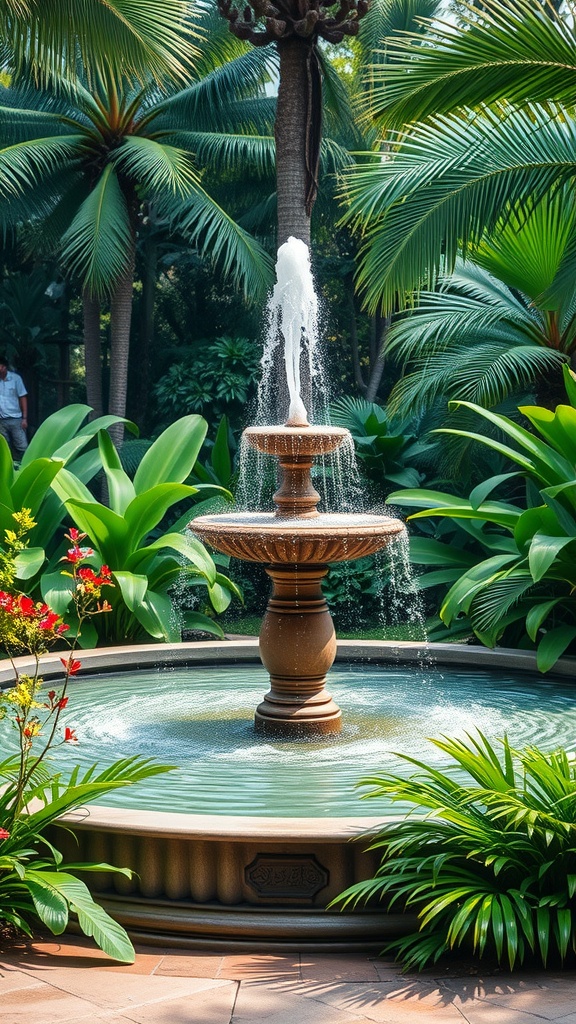
In any tropical garden, creating a focal point is key to drawing the eye and adding interest. The image showcases a stunning fountain surrounded by lush greenery, making it a perfect centerpiece. The sound of water adds a calming effect, enhancing the overall experience of the garden.
When designing your garden, think about how elements like this fountain can serve as a gathering spot. It invites people to pause and enjoy the beauty around them. The vibrant flowers and broad leaves complement the fountain, creating a harmonious look that captures attention.
Consider incorporating similar features in your garden. Whether it’s a fountain, a sculpture, or a unique plant arrangement, a focal point can transform your space. It not only enhances visual appeal but also creates a sense of balance and tranquility.
Incorporating Hardscaping Elements
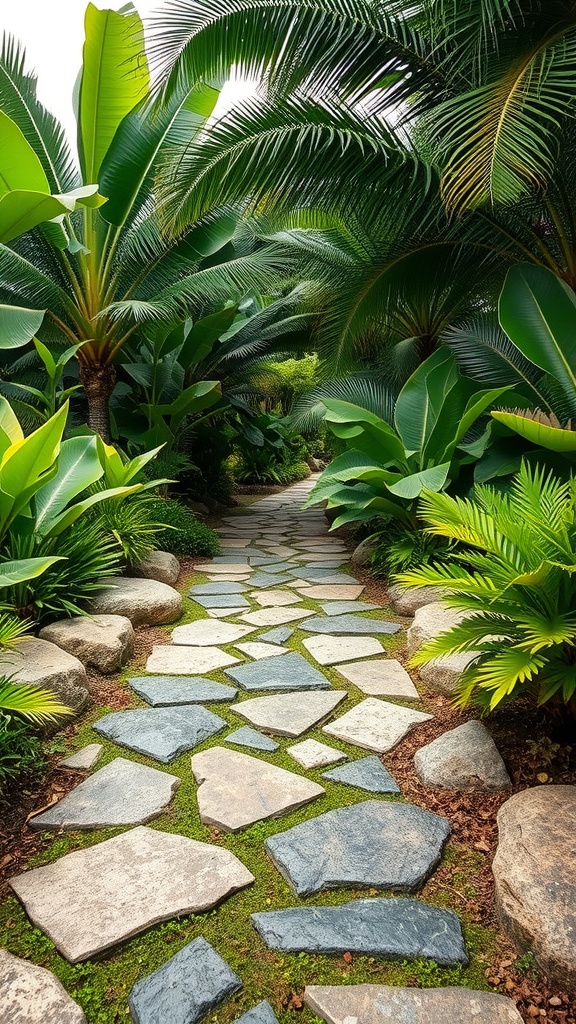
When designing a tropical garden, hardscaping plays a key role in creating a balanced look. The image showcases a beautiful pathway made of stone, winding through lush greenery. This pathway not only guides visitors but also adds structure to the garden.
Using natural stones in various shapes and sizes can create an organic feel. The mix of colors and textures in the stones complements the vibrant foliage around them. This combination enhances the tropical vibe while providing a practical walking surface.
Incorporating elements like rocks and pavers can also help define different areas of the garden. For instance, you might use a stone path to lead to a seating area or a water feature. This not only makes the space more functional but also visually appealing.
Don’t forget about the spaces between the stones! Filling these gaps with moss or small plants can soften the hard edges and add to the lushness of the garden. This approach creates a seamless blend between hardscaping and landscaping, making your tropical garden feel inviting and serene.
Choosing the Right Soil
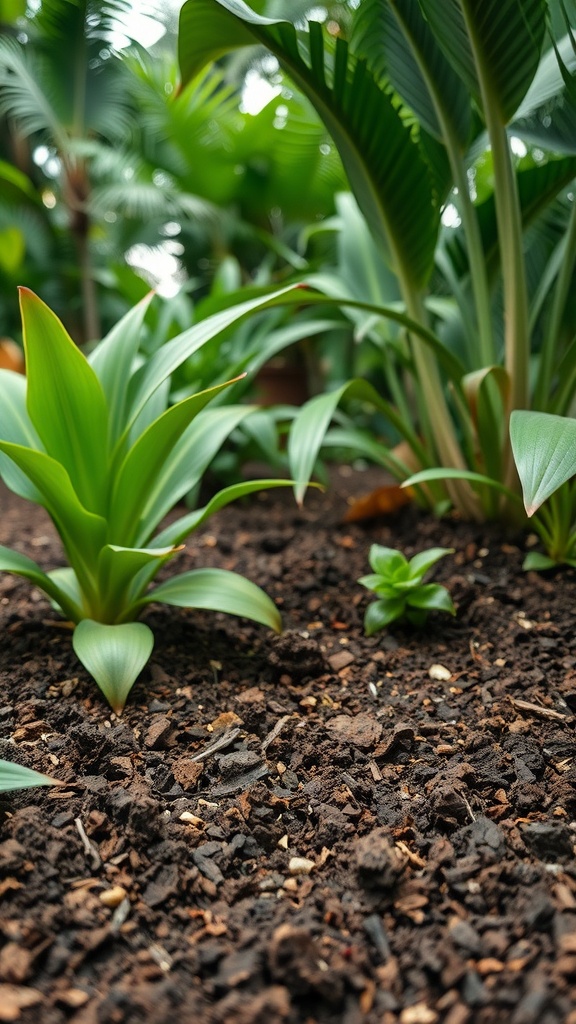
When designing a tropical garden, the soil you choose plays a big role in how your plants thrive. The image shows rich, dark soil that is perfect for supporting lush greenery. This type of soil is often well-draining and packed with organic matter, which is essential for tropical plants.
Look for soil that retains moisture yet allows excess water to drain away. Tropical plants typically prefer a mix that includes compost and mulch. This not only provides nutrients but also helps maintain a stable temperature for the roots.
Don’t forget to test your soil’s pH. Most tropical plants do well in slightly acidic to neutral soil. Adjusting the pH can make a huge difference in plant health. Adding amendments like peat moss or sulfur can help achieve the right balance.
Finally, consider the texture of your soil. A loamy texture is ideal, as it holds nutrients and moisture while allowing for good airflow. With the right soil, your tropical garden will flourish and bring vibrant life to your space.
Sustainable Watering Practices
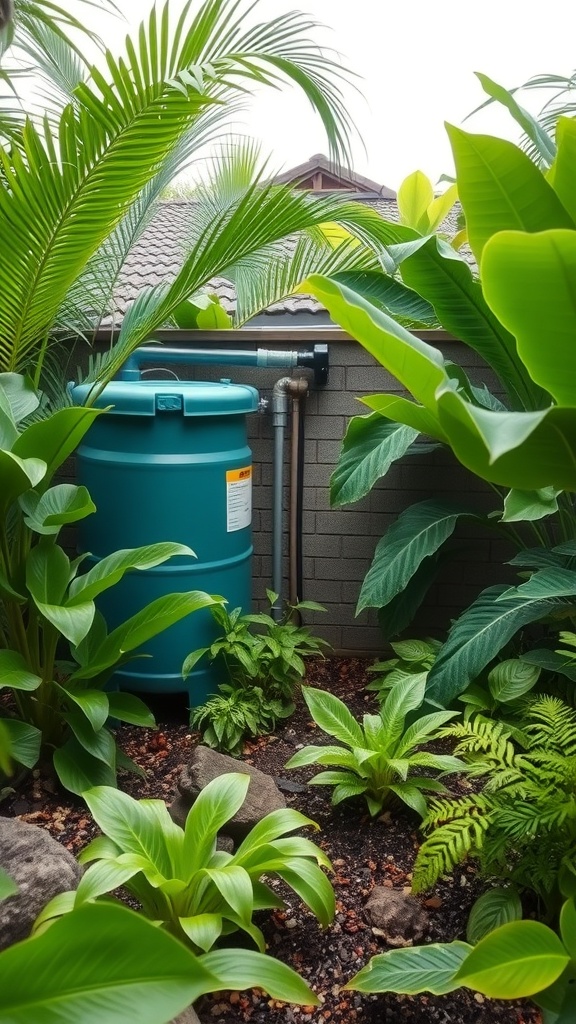
In a tropical garden, keeping plants healthy often means finding smart ways to water them. The image shows a rainwater collection system, which is a fantastic way to use natural resources. This setup captures rainwater, allowing you to water your garden without relying solely on tap water.
Using rainwater is eco-friendly and helps reduce water bills. The bright blue tank stands out among the lush green plants, showing how practical and attractive sustainable solutions can be. Surrounding the tank, you can see various tropical plants thriving, which highlights the importance of proper watering.
Setting up a rainwater collection system is simple. You can install gutters on your roof that direct rainwater into a barrel or tank. This collected water can then be used to hydrate your garden, especially during dry spells. It’s a win-win for your plants and the environment!
Incorporating such systems not only supports your garden’s health but also promotes sustainability. So, consider adding a rainwater collection system to your tropical garden. Your plants will thank you, and you’ll feel good about making a positive impact.
Planning for Wildlife
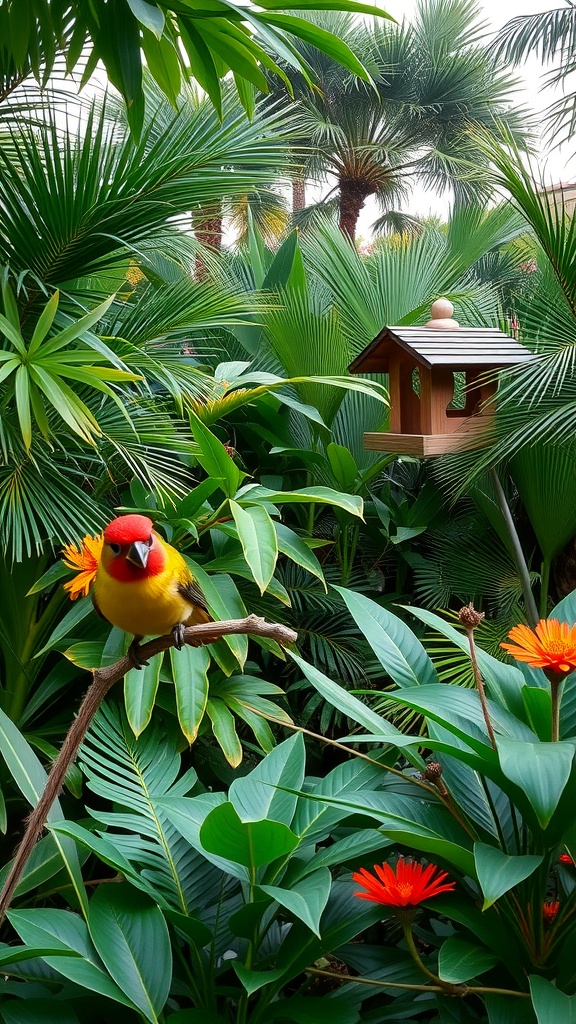
Creating a tropical garden is not just about the plants; it’s also about inviting wildlife into your space. The image shows a vibrant scene filled with lush greenery and colorful flowers, which naturally attracts various creatures.
The bird perched on the branch adds a lively touch. This highlights the importance of incorporating elements that support local wildlife. Birdhouses, like the one seen in the image, provide safe nesting spots for birds, encouraging them to visit your garden.
Choosing native plants is another great way to attract wildlife. These plants not only thrive in your local climate but also offer food and shelter for insects and birds. The bright flowers in the image can attract pollinators, which are essential for a healthy garden ecosystem.
Water features, such as small ponds or bird baths, can also be beneficial. They provide hydration and a place for animals to cool off. By planning your garden with wildlife in mind, you create a thriving environment that benefits both the plants and the creatures that visit.